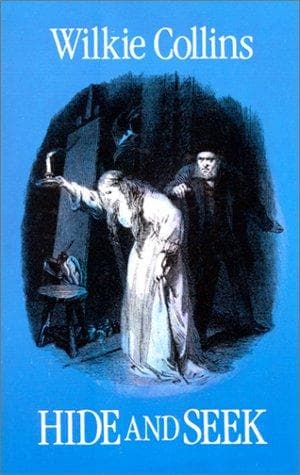
Deaf women -- Fiction; Father figures -- Fiction; Painters -- Fiction; Psychological fiction; Young men -- Fiction
He was by profession an artist--an artist in spite of circumstances.
Neither his father, nor his mother, nor any relation of theirs, on
either side, had ever practiced the Art of Painting, or had ever derived
any special pleasure from the contemplation of pictures. They were all
respectable commercial people of the steady fund-holding old school,
who lived exclusively within their own circle; and had never so much as
spoken to a live artist or author in the whole course of their lives.
The City-world in which Valentine’s boyhood was passed, was as destitute
of art influences of any kind as if it had been situated on the coast
of Greenland; and yet, to the astonishment of everybody, he was always
drawing and painting, in his own rude way, at every leisure hour. His
father was, as might be expected, seriously disappointed and amazed at
the strange direction taken by the boy’s inclinations. No one (including
Valentine himself) could ever trace them back to any recognizable
source; but everyone could observe plainly enough that there was no hope
of successfully opposing them by fair means of any kind. Seeing this,
old Mr. Blyth, like a wise man, at last made a virtue of necessity; and,
giving way to his son, entered him, under strong commercial protest, as
a student in the Schools of the Royal Academy.
Here Valentine remained, working industriously, until his twenty-first
birthday. On that occasion, Mr. Blyth had a little serious talk with
him about his prospects in life. In the course of this conversation, the
young man was informed that a rich merchant-uncle was ready to take him
into partnership; and that his father was equally ready to start him
in business with his whole share, as one of three children, in the
comfortable inheritance acquired for the family by the well-known City
house of Blyth and Company. If Valentine consented to this arrangement,
his fortune was secured, and he might ride in his carriage before he was
thirty. If, on the other hand, he really chose to fling away a fortune,
he should not be pinched for means to carry on his studies as a painter.
The interest of his inheritance on his father’s death, should be paid
quarterly to him during his father’s lifetime: the annual independence
thus secured to the young artist, under any circumstances, being
calculated as amounting to a little over four hundred pounds a year.
Valentine was not deficient in gratitude. He took a day to consider
what he should do, though his mind was quite made up about his choice
beforehand; and then persisted in his first determination; throwing away
the present certainty of becoming a wealthy man, for the sake of the
future chance of turning out a great painter.
Public-domain text, read in full here on John Shaqi.
Reviews
Reviews
No reviews yet
Be the first to share your thoughts on this work.
Join the Discussion
Join the discussion
Sign in to leave a comment or review.
Sign InorCreate an account