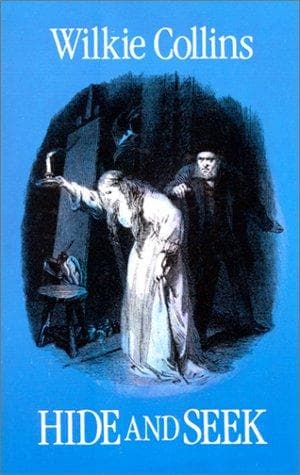
Deaf women -- Fiction; Father figures -- Fiction; Painters -- Fiction; Psychological fiction; Young men -- Fiction
Thus it was with Valentine. He had sacrificed a fortune to his Art;
and his Art--in the world’s eye at least--had given to him nothing
in return. Friends and relatives who had not scrupled, on being made
acquainted with his choice of a vocation, to call it in question,
and thereby to commit that worst and most universal of all human
impertinences, which consists of telling a man to his face, by the
plainest possible inference, that others are better able than he is
himself to judge what calling in life is fittest and worthiest for
him--friends and relatives who thus upbraided Valentine for his refusal
to accept the partnership in his uncle’s house, affected, on discovering
that he made no public progress whatever in Art, to believe that he was
simply an idle fellow, who knew that his father’s liberality placed him
beyond the necessity of working for his bread, and who had taken up the
pursuit of painting as a mere amateur amusement to occupy his leisure
hours. To a man who labored like poor Blyth, with the steadiest industry
and the highest aspirations, such whispered calumnies as these were of
all mortifications the most cruel, of all earthly insults the hardest to
bear.
Still he worked on patiently, never losing faith or hope, because
he never lost the love of his Art, or the enjoyment of pursuing it,
irrespective of results, however disheartening. Like most other men of
his slight intellectual caliber, the works he produced were various, if
nothing else. He tried the florid style, and the severe style; he was by
turns devotional, allegorical, historical, sentimental, humorous. At one
time, he abandoned figure-painting altogether, and took to landscape;
now producing conventional studies from Nature,--and now, again,
reveling in poetical compositions, which might have hung undetected in
many a collection as doubtful specimens of Berghem or Claude.
But whatever department of painting Valentine tried to excel in, the
same unhappy destiny seemed always in reserve for each completed effort.
For years and years his pictures pleaded hard for admission at the
Academy doors, and were invariably (and not unfairly, it must be
confessed) refused even the worst places on the walls of the Exhibition
rooms. Season after season he still bravely struggled on, never
depressed, never hopeless while he was before his easel, until at
last the day of reward--how long and painfully wrought for!--actually
arrived. A small picture of a very insignificant subject--being only a
kitchen “interior,” with a sleek cat on a dresser, stealing milk from
the tea-tray during the servant’s absence--was benevolently marked
“doubtful” by the Hanging Committee; was thereupon kept in reserve, in
case it might happen to fit any forgotten place near the floor--did fit
such a place--and was really hung up, as Mr. Blyth’s little unit of a
contribution to the one thousand and odd works exhibited to the public,
that year, by the Royal Academy.
Public-domain text, read in full here on John Shaqi.
Reviews
Reviews
No reviews yet
Be the first to share your thoughts on this work.
Join the Discussion
Join the discussion
Sign in to leave a comment or review.
Sign InorCreate an account