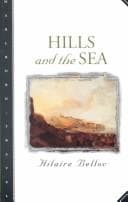
England -- Description and travel; Europe -- Description and travel
It was on or about a Tuesday (I speak without boasting) that my
companion and I crept in by darkness to the unpleasant harbour of
Lowestoft. And I say "unpleasant" because, however charming for the
large Colonial yacht, it is the very devil for the little English craft
that tries to lie there. Great boats are moored in the Southern Basin,
each with two head ropes to a buoy, so that the front of them makes a
kind of entanglement such as is used to defend the front of a position
in warfare. Through this entanglement you are told to creep as best you
can, and if you cannot (who could?) a man comes off in a boat and moors
you, not head and stern, but, as it were, criss-cross, or slant-ways, so
that you are really foul of the next berth alongside, and that in our
case was a little steamer.
Then when you protest that there may be a collision at midnight, the man
in the boat says merrily, "Oh, the wind will keep you off," as though
winds never changed or dropped.
I should like to see moorings done that way, at Cowes, say, or in
Southampton Water. I should like to see a lot of craft laid head and
tail to the wind with a yard between each, and, when Lord Isaacs
protested, I should like to hear the harbour man say in a distant voice,
"_Sic volo, sic jubeo_" (a classical quotation misquoted, as in the
South-country way), "the wind never changes here."
Such as it was, there it was, and trusting in the wind and God's
providence we lay criss-cross in Lowestoft South Basin. The Great Bear
shuffled round the pole and streaks of wispy clouds lay out in heaven.
The next morning there was a jolly great breeze from the East, and my
companion said, "Let us put out to sea." But before I go further, let me
explain to you and to the whole world what vast courage and meaning
underlay these simple words. In what were we to put to sea?
This little boat was but twenty-five feet over all. She had lived since
1864 in inland waters, mousing about rivers, and lying comfortably in
mudbanks. She had a sprit seventeen foot outboard, and I appeal to the
Trinity Brothers to explain what that means; a sprit dangerous and
horrible where there are waves; a sprit that will catch every sea and
wet the foot of your jib in the best of weathers; a sprit that weighs
down already overweighted bows and buries them with every plunge. _Quid
dicam?_ A Sprit of Erebus. And why had the boat such a sprit? Because
her mast was so far aft, her forefoot so deep and narrow, her helm so
insufficient, that but for this gigantic sprit she would never come
round, and even as it was she hung in stays and had to have her weather
jib-sheet hauled in for about five minutes before she would come round.
So much for the sprit.
Public-domain text, read in full here on John Shaqi.
Reviews
Reviews
No reviews yet
Be the first to share your thoughts on this work.
Join the Discussion
Join the discussion
Sign in to leave a comment or review.
Sign InorCreate an account