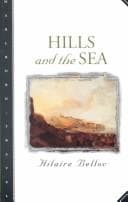
England -- Description and travel; Europe -- Description and travel
For those who complain of railways talk folly, and prove themselves
either rich or, more probably, the hangers-on of the rich. A railway is
an excellent thing; it takes one quickly through the world for next to
nothing, and if in many countries the people it takes are brutes, and
disfigure all they visit, that is not the fault of the railway, but of
the Government and religion of these people, which, between them, have
ruined the citizens of the State.
So was it not in this place of which I speak, for all the people were
industrious, wealthy, kind, amenable, and free.
I took a ticket for the only town on the railway list whose history I
knew, and then in a third-class carriage made entirely of wood I settled
down to a conversation with my kind; for though these people were not of
my blood--indeed, I am certain that for some hundreds of years not a
drop of their blood has mingled with my own--yet we understood each
other by a common tongue called Lingua Franca, of which I have spoken in
another place and am a past master.
As all the people round began their talk of cattle, land, and weather,
two men next me, or rather the one next me and the other opposite me,
began to talk of the election which had been held in that delightful
plain: by which, as I learnt, a dealer in herds had been defeated by a
somewhat usurious and perhaps insignificant attorney. In this election
more than half the voters--that is, a good third of the families in the
plain--had gone up to the little huts of wood and had made a mark upon a
bit of paper, some on one part, some on the other. About a sixth of the
families had desired the dealer in herds to make their laws, and about a
sixth the attorney. Of the rest some could not, some would not, go and
make the little mark of which I speak. Many more could by law make it,
and would have made it, if they had thought it useful to any possible
purpose under the sun. One-sixth, I say, had made their mark for the
aged and money-lending attorney, and one-sixth for the venerable but
avaricious dealer in herds, and since the first sixth was imperceptibly
larger than the second it was the lawyer, not the merchant, who stood to
make the laws for the people. But not only to make laws: he was also in
some mystic way the Persona and Representative of all the plain. The
long sun-lit fields; the infinite past--Carolingian, enormous; the
delicate fronds of young trees; the distant sight of the mountains,
which is the note of all that land; the invasions it had suffered, the
conquests it might yet achieve; its soul and its material self, were all
summed up in the solicitor, not in the farmer, and he was to vote on
peace or war, on wine or water, on God or no God in the schools. For the
people of the plain were self-governing; they had no lords.
Of my two companions, the one had voted for the cow-buyer, but the other
for the scribbler upon parchment, and they discussed their action
without heat, gently and with many reasons.
Public-domain text, read in full here on John Shaqi.
Reviews
Reviews
No reviews yet
Be the first to share your thoughts on this work.
Join the Discussion
Join the discussion
Sign in to leave a comment or review.
Sign InorCreate an account