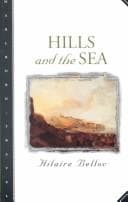
England -- Description and travel; Europe -- Description and travel
The use and the pleasure of travel are closely mingled, because the use
of it is fulfilment, and in fulfilling oneself a great pleasure is
enjoyed. Every man bears within him not only his own direct experience,
but all the past of his blood: the things his own race has done are part
of himself, and in him also is what his race will do when he is dead.
This is why men will always read _records_, and why, even when letters
are at their lowest, _records_ still remain. Thus, if a diary be known
to be true, then it seems vivid and becomes famous where if it were
fiction no one would find any merit in it. History, therefore, once a
man has begun to know it, becomes a necessary food for the mind, without
which it cannot sustain its new dimension. It is an aggregate of
universal experience, nor, other things being equal, is any man's
judgment so thin and weak as the judgment of a man who knows nothing of
the past. But history, if it is to be kept just and true and not to
become a set of airy scenes, fantastically coloured by our later time,
must be continually corrected and moderated by the seeing and handling
of _things_.
If the West of Europe be one place and one people separate from all the
rest of the world, then that unity is of the last importance to us; and
that it is so, the wider our learning the more certain we are. All our
religion and custom and mode of thought are European. A European State
is only a State because it is a State of Europe; and the demarcations
between the ever-shifting States of Europe are only dotted lines, but
between the Christian and the non-Christian the boundary is hard and
full.
Now, a man who recognises this truth will ask, "Where could I find a
model of the past of that Europe? In what place could I find the best
single collection of all the forms which European energy has created,
and of all the outward symbols in which its soul has been made manifest?
To such a man the answer should be given, 'You will find these things
better in the town of _Arles_ than in any other place.'" A man asking
such a question would mean to travel. He ought to travel to _Arles_.
Long before men could write, this hill (which was the first dry land at
the head of the Rhone delta, beyond the early mud-flats which the river
was pushing out into the sea) was inhabited by our ancestors. Their
barbaric huts were grouped round the shelving shore; their axes and
their spindles remain.
When thousands of years later the Greeks pushed northward from Massilia,
Arles was the first great corner in their road and the first
halting-place after the useless deserts that separated their port from
the highway of the Rhone valley.
Public-domain text, read in full here on John Shaqi.
Reviews
Reviews
No reviews yet
Be the first to share your thoughts on this work.
Join the Discussion
Join the discussion
Sign in to leave a comment or review.
Sign InorCreate an account