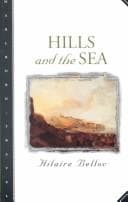
England -- Description and travel; Europe -- Description and travel
* * * * *
So having come round to the Ouse again, and to the edge of the Fens at
Lynn, I went off at random whither next it pleased me to go.
THE GUNS
I had slept perhaps seven hours when a lantern woke me, flashed in my
face, and I wondered confusedly why there was straw in my bed; then I
remembered that I was not in bed at all, but on manoeuvres. I looked up
and saw a sergeant with a bit of paper in his hand. He was giving out
orders, and the little light he carried sparkled on the gold of his
great dark-blue coat.
"You, the Englishman," he said (for that was what they called me as a
nickname), "go with the gunners to-day. Where is Labbé?"
Labbé (that man by profession a cook, by inclination a marquis, and now
by destiny a very good driver of guns) the day before had gone on foot.
To-day he was to ride. I pointed him out where he still lay sleeping.
The sergeant stirred him about with his foot, and said, "Pacte and
Basilique"; and Labbé grunted. In this simple way every one knew his
duty--Labbé that he had another hour's sleep and more, and that he was
to take my horses: I, that I must rise and get off to the square.
Then the sergeant went out of the barn, cursing the straw on his spurs,
and I lit a match and brushed down my clothes and ran off to the square.
It was not yet two in the morning.
The gunners were drawn up in a double line, and we reserve drivers stood
separate (there were only a dozen of us), and when they formed fours we
were at the tail. There was a lieutenant with us and a sergeant, also
two bombardiers--all mounted; and so we went off, keeping step till we
were out of the town, and then marching as we chose and thanking God for
the change. For it is no easy matter for drivers to march with gunners;
their swords impede them, and though the French drivers have not the
ridiculous top-boots that theatricalise other armies, yet even their
simple boots are not well suited for the road.
This custom of sending forward reserve drivers on foot, in rotation, has
a fine name to it. It is called "Haut-le-pied," "High-the-foot," and
must therefore be old.
A little way out of the town we had leave to sing, and we began, all
together, one of those long and charming songs with which the French
soldiery make-believe to forget the tedium of the road and the hardship
of arms.
Public-domain text, read in full here on John Shaqi.
Reviews
Reviews
No reviews yet
Be the first to share your thoughts on this work.
Elsewhere in the archive
Join the Discussion
Join the discussion
Sign in to leave a comment or review.
Sign InorCreate an account