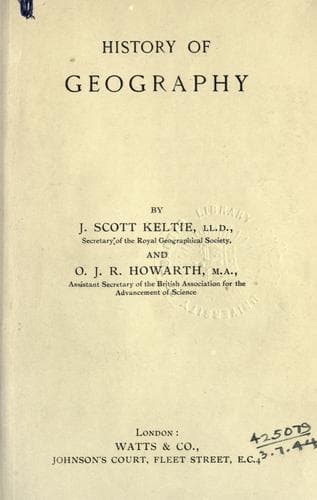
From this point it becomes necessary to vary the treatment of our
subject hitherto followed. With the breakup of the Roman Empire and
the establishment of Christianity the old learning was obliterated.
Religion became the central fact of intellectual exercise, and, except
in so far as Christian doctrine and Holy Scripture involved reference
to natural phenomena, every branch of natural science was withered by
the breath of theology. The first serious assaults of the barbarian
invader were made on the frontiers of the Roman Empire in the fourth
century A.D.; in 330 the seat of government was transferred from Rome
to Byzantium, and at the close of the century the empire was divided
into eastern and western parts. It has often been pointed out that
these events did more than mark the beginning of the disruption of
the Roman Empire; they also mark the parting of the ways of eastern
and western European religion and culture. In the west it became
the function of Christianity to teach and civilize peoples untaught
and uncivilized; but, limited and intolerant as was its outlook
upon natural science generally, it discarded the learning of the
pre-Christian era. We have now to inquire how geography was affected by
this attitude towards secular learning.
It is true that the habit of travel, so far from being forgotten, was
even fostered by missionary work and the practice of pilgrimage.
Again, opportunities for the extension of geographical knowledge were
provided by various episodes in the history of the centuries with
which we are now concerned; thus Procopius, the historian of the
Persian, Vandal, and Gothic wars of the epoch of the Roman (Byzantine)
emperor Justinian in the sixth century, had ample opportunities for
geographical description and used them well. Justinian even despatched
an expedition to China (which returned thence). But the geographical
theorists of the period now under review had little if any concern with
contemporary travellers’ results.
Public-domain text, read in full here on John Shaqi.
Reviews
Reviews
No reviews yet
Be the first to share your thoughts on this work.
Join the Discussion
Join the discussion
Sign in to leave a comment or review.
Sign InorCreate an account