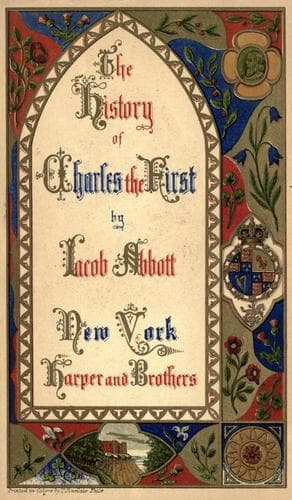
History of King Charles the First of EnglandAbbott, Jacob
History
History of King Charles the First of England
Abbott, Jacob
Charles I, King of England, 1600-1649; Great Britain -- History -- Charles I, 1625-1649; Great Britain -- Kings and rulers -- Biography
"Whereas Charles Stuart, king of England, has been convicted,
attainted, and condemned of high treason, and sentence was pronounced
against him by this court, to be put to death by the severance of his
head from his body, of which sentence execution yet remaineth to be
done; these are, therefore, now to will and require you to see the
said sentence executed in the open street before Whitehall, upon the
morrow, being the thirtieth day of this instant month of January,
between the hours of ten in the morning and five in the afternoon of
the said day, with full effect; and for so doing this shall be your
sufficient warrant."
[Sidenote: Warrant signed by the judges.]
Fifty-nine of the judges signed this warrant, and then it was sent to
the persons appointed to carry the sentence into execution.
[Sidenote: The king sleeps well.]
That night the king slept pretty well for about four hours, though
during the evening before he could hear in his apartment the noise
of the workmen building the platform, or scaffold as it was commonly
called, on which the execution was to take place. He awoke, however,
long before day. He called to an attendant who lay by his bedside, and
requested him to get up. "I will rise myself," said he, "for I have a
great work to do to-day." He then requested that they would furnish him
with the best dress, and an extra supply of under clothing, because it
was a cold morning. He particularly wished to be well guarded from the
cold, lest it should cause him to shiver, and they would suppose that
he was trembling from fear.
"I have no fear," said he. "Death is not terrible to me. I bless God
that I am prepared."
[Sidenote: Preparations.]
[Sidenote: Reading the service.]
The king had made arrangements for divine service in his room early
in the morning, to be conducted by the Bishop of London. The bishop
came in at the time appointed, and read the prayers. He also read,
in the course of the service, the twenty-ninth chapter of Matthew,
which narrates the closing scenes of our Saviour's life. This was,
in fact, the regular lesson for the day, according to the Episcopal
ritual, which assigns certain portions of Scripture to every day of
the year. The king supposed that the bishop had purposely selected
this passage, and he thanked him for it, as he said it seemed to
him very appropriate to the occasion. "May it please your majesty,"
said the bishop, "it is the proper lesson for the day." The king was
much affected at learning this fact, as he considered it a special
providence, indicating that he was prepared to die, and that he should
be sustained in the final agony.
[Sidenote: Summons.]
Public-domain text, read in full here on John Shaqi.
Reviews
Reviews
No reviews yet
Be the first to share your thoughts on this work.
Elsewhere in the archive
Join the Discussion
Join the discussion
Sign in to leave a comment or review.
Sign InorCreate an account