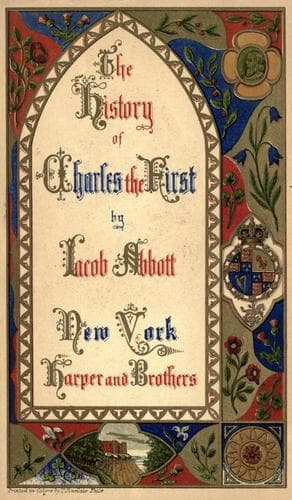
History of King Charles the First of EnglandAbbott, Jacob
History
History of King Charles the First of England
Abbott, Jacob
Charles I, King of England, 1600-1649; Great Britain -- History -- Charles I, 1625-1649; Great Britain -- Kings and rulers -- Biography
By these and similar proceedings, large sums of money were collected
by the Star Chamber for the king's treasury, and all expression
of discontent and dissatisfaction on the part of the people was
suppressed. This last policy, however, the suppression of expressions
of dissatisfaction, is always a very dangerous one for any government
to undertake. Discontent, silenced by force, is exasperated and
extended. The outward signs of its existence disappear, but its inward
workings become wide-spread and dangerous, just in proportion to the
weight by which the safety-valve is kept down. Charles and his court of
the Star Chamber rejoiced in the power and efficacy of their tremendous
tribunal. They issued proclamations and decrees, and governed the
country by means of them. They silenced all murmurs. But they were,
all the time, disseminating through the whole length and breadth of
the land a deep and inveterate enmity to royalty, which ended in a
revolution of the government, and the decapitation of the king. They
stopped the hissing of the steam for the time, but caused an explosion
in the end.
[Sidenote: 1633.]
[Sidenote: The kingdom of Scotland.]
Charles was King of Scotland as well as of England. The two countries
were, however, as countries, distinct, each having its own laws, its
own administration, and its own separate dominions. The sovereign,
however, was the same. A king could inherit two kingdoms, just as a man
can, in this country, inherit two farms, which may, nevertheless, be
at a distance from each other, and managed separately. Now, although
Charles had, from the death of his father, exercised sovereignty over
the realm of Scotland, he had not been crowned, nor had even visited
Scotland. The people of Scotland felt somewhat neglected. They
murmured that their common monarch gave all his attention to the sister
and rival kingdom. They said that if the king did not consider the
Scottish crown worth coming after, they might, perhaps, look out for
some other way of disposing of it.
[Sidenote: The king visits Scotland.]
[Sidenote: He is crowned there.]
[Sidenote: The king returns to London.]
Public-domain text, read in full here on John Shaqi.
Reviews
Reviews
No reviews yet
Be the first to share your thoughts on this work.
Elsewhere in the archive
Join the Discussion
Join the discussion
Sign in to leave a comment or review.
Sign InorCreate an account