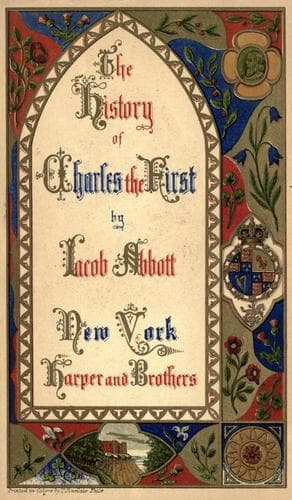
History of King Charles the First of EnglandAbbott, Jacob
History
History of King Charles the First of England
Abbott, Jacob
Charles I, King of England, 1600-1649; Great Britain -- History -- Charles I, 1625-1649; Great Britain -- Kings and rulers -- Biography
Now in England there was a large and increasing party who hated and
opposed the whole Episcopal system. Laud, to counteract this tendency,
attempted to define, and enlarge, and extend that system as far as
possible. He made the most of all the ceremonies of worship, and
introduced others, which were, indeed, not exactly new, but rather
ancient ones revived. He did this conscientiously, no doubt, thinking
that these forms of devotion were adapted to impress the soul of the
worshiper, and lead him to feel, in his heart, the reverence which his
outward action expressed. Many of the people, however, bitterly opposed
these things. They considered it a return to popery. The more that
Laud, and those who acted with him, attempted to magnify the rites and
the powers of the Church, the more these persons began to abhor every
thing of the kind. They wanted Christianity itself, _in its purity_,
uncontaminated, as they said, by these popish and idolatrous forms.
They were called _Puritans_.
[Sidenote: Disputes about the services of the Church.]
There were a great many things which seem to us at the present day
of very little consequence, which were then the subjects of endless
disputes and of the most bitter animosity. For instance, one point was
whether the place where the communion was to be administered should
be called the communion table or the altar; and in what part of the
church it should stand; and whether the person officiating should be
called a priest or a clergyman; and whether he should wear one kind of
dress or another. Great importance was attached to these things; but it
was not on their own account, but on account of their bearing on the
question whether the Lord's Supper was to be considered only a ceremony
commemorative of Christ's death, or whether it was, whenever celebrated
by a regularly authorized priest, _a real renewal_ of the sacrifice of
Christ, as the Catholics maintained. Calling the communion table an
altar, and the officiating minister a priest, and clothing him in a
sacerdotal garb, countenanced the idea of a renewal of the sacrifice
of Christ. Laud and his coadjutors urged the adoption of all these and
similar usages. The Puritans detested them, because they detested and
abhorred the doctrine which they seemed to imply.
[Sidenote: Controversy about amusements on Sunday.]
Public-domain text, read in full here on John Shaqi.
Reviews
Reviews
No reviews yet
Be the first to share your thoughts on this work.
Elsewhere in the archive
Join the Discussion
Join the discussion
Sign in to leave a comment or review.
Sign InorCreate an account