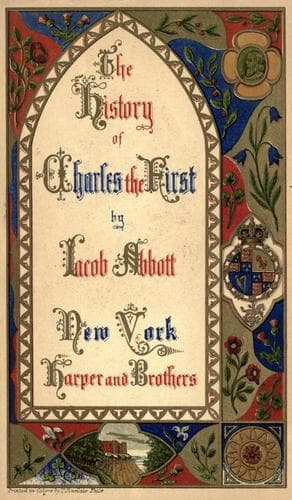
History of King Charles the First of EnglandAbbott, Jacob
History
History of King Charles the First of England
Abbott, Jacob
Charles I, King of England, 1600-1649; Great Britain -- History -- Charles I, 1625-1649; Great Britain -- Kings and rulers -- Biography
Charles found his position in no respect improved by the execution of
Strafford. The Commons, finding their influence and power increasing,
grew more and more bold, and were from this time so absorbed in the
events connected with the progress of their quarrel with the king,
that they left Laud to pine in his prison for about four years. They
then found time to act over again the solemn and awful scene of a
trial for treason before the House of Peers, the passing of a bill
of attainder, and an execution on Tower Hill. Laud was over seventy
years of age when the ax fell upon him. He submitted to his fate with
a calmness and heroism in keeping with his age and his character. He
said, in fact, that none of his enemies could be more desirous to send
him out of life than he was to go.
CHAPTER IX.
CIVIL WAR.
[Sidenote: Increasing demands of the Commons.]
The way in which the king came at last to a final rupture with
Parliament was this. The victory which the Commons gained in the case
of Strafford had greatly increased their confidence and their power,
and the king found, for some months afterward, that instead of being
satisfied with the concessions he had made, they were continually
demanding more. The more he yielded, the more they encroached. They
grew, in a word, bolder and bolder, in proportion to their success.
They considered themselves doing the state a great and good service by
disarming tyranny of its power. The king, on the other hand, considered
them as undermining all the foundations of good government, and as
depriving him of personal rights, the most sacred and solemn that could
vest in any human being.
[Sidenote: The king gradually loses his power.]
It will be recollected that on former occasions, when the king had got
into contention with a Parliament, he had dissolved it, and either
attempted to govern without one, or else had called for a new election,
hoping that the new members would be more compliant. But he could not
dissolve the Parliament now. They had provided against this danger. At
the time of the trial of Strafford, they brought in a bill into the
Commons providing that thenceforth the Houses could not be prorogued
or dissolved without their own consent. The Commons, of course, passed
the bill very readily. The Peers were more reluctant, but they did not
dare to reject it. The king was extremely unwilling to sign the bill;
but, amid the terrible excitements and dangers of that trial, he was
overborne by the influences of danger and intimidation which surrounded
him. He signed the bill. Of course the Commons were, thereafter, their
own masters. However dangerous or destructive the king might consider
their course of conduct to be, he could now no longer arrest it, as
heretofore, by a dissolution.
Public-domain text, read in full here on John Shaqi.
Reviews
Reviews
No reviews yet
Be the first to share your thoughts on this work.
Elsewhere in the archive
Join the Discussion
Join the discussion
Sign in to leave a comment or review.
Sign InorCreate an account