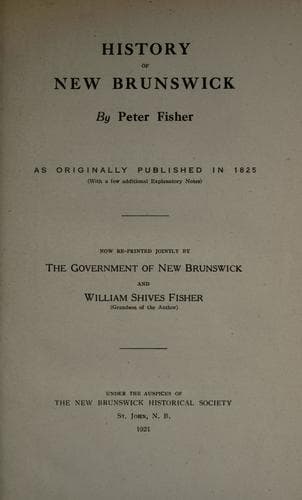
New Brunswick -- Description and travel; New Brunswick -- History
Oats are much cultivated in this country, and generally turn out a good
crop. The quantity of seed is from two to three bushels, and the
produce from twenty to thirty bushels per acre. Barley is not much
cultivated, although it would do well as a substitute in frosty
seasons.
Buckwheat is a grain that gives a large return for the quantity sown.
It is raised on lands that are too poor to produce good crops of the
other grains, and sown later in the season, so that the greatest summer
heat may be past before the grain is formed in the ear; for should
there be a few very hot days when the grain is in the milk, the crop
would be destroyed. The same would be the case, if a slight frost
should strike it in that stage. If, however, it escapes these
casualties, to which it is liable, it turns out a good crop, yielding
from forty to sixty bushels to an acre. There is a species of wild
Buckwheat, which is a surer crop, but of an inferior quality.
Millet has lately been introduced into the Province. It is said to do
well on most lands, but has not been much attended to.
Indian Corn or Maize, flourishes in high perfection on the intervales,
which are generally composed of alluvial soil. It is usually planted in
hills nearly four feet asunder. Five grains is the usual quantity for a
hill. It is a plant that requires a light rich soil, old manure, and
hot seasons; should these requisites concur, a good crop may be
expected. It is usually hoed thrice, and produces from twenty-five to
forty bushels per acre.
Pease are a hardy grain, and produce from ten to fifteen bushels to an
acre.
Beans are usually set in drills; they thrive well on light sandy lands,
but are not much cultivated in the country.
Public-domain text, read in full here on John Shaqi.
Reviews
Reviews
No reviews yet
Be the first to share your thoughts on this work.
Join the Discussion
Join the discussion
Sign in to leave a comment or review.
Sign InorCreate an account