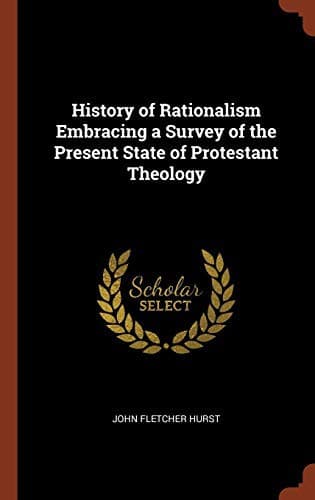
History of Rationalism Embracing a Survey of the Present State of Protestant TheologyHurst, J. F. (John Fletcher)
History
History of Rationalism Embracing a Survey of the Present State of Protestant Theology
Hurst, J. F. (John Fletcher)
Protestantism; Rationalism -- History
Voltaire was very popular throughout the country. A number of
periodicals arose, having the avowed object of disseminating the views
of himself and his friends wherever the Dutch language was spoken. La
Mettrie, driven from France, here found a home. Voltaire barely escaped
the Bastille by fleeing thither, though when he left the land which had
given him shelter, he bade it the graceful farewell: "Adieu canals,
ducks, and common people! I have seen nothing among you that is worth a
fig!" But Voltaire had cause to cherish no very pleasant feelings toward
Holland. Her great men had received him coldly. His excessive vanity was
never so deeply wounded as by the sober Dutchmen. Desiring to make the
acquaintance of Boerhaave, the most celebrated physician in Europe, he
called upon him, stating that he "wished to see him." Instead of
becoming rapturous at the Frenchman's compliment, the plain old Leyden
burgher coolly replied: "Oh, sit as long as you please, sir, and look at
me; but excuse me if I go on with my writing." On offering one of his
philosophical books to Professor Gravesande, the latter returned it to
Voltaire in a few days with only this comment: "You are a poet, sir; a
very good poet, indeed!"
The chief disaster resulting from the French skeptical writings was not
so much the skeptical indoctrination of the people as the general
diffusion of a light and frivolous indifference to all religion. Through
the influence of France the Dutch became enslaved to vicious customs,
taste, modes of thought, and conversation. The etiquette of the
Parisians was domesticated among their northern imitators. The works
published in Holland were mere reproductions from the French, and many
of them were written in that language. The simplicity, truthfulness,
and attachment to old forms, which had so long existed, gave place to a
general spirit of innovation. The reverential and determined spirit that
had enabled their forefathers to gain their independence was no longer
apparent in the children. Liberal to a fault, Holland was now paying the
penalty of her excessive hospitality. Sensuality and superficial
epicureanism were at once the taste and the destruction of many of the
young minds of the country.
Public-domain text, read in full here on John Shaqi.
Reviews
Reviews
No reviews yet
Be the first to share your thoughts on this work.
Elsewhere in the archive
Join the Discussion
Join the discussion
Sign in to leave a comment or review.
Sign InorCreate an account