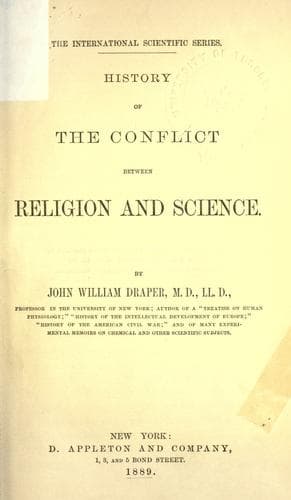
History of the Conflict Between Religion and ScienceDraper, John William
Religion
History of the Conflict Between Religion and Science
Draper, John William
Religion and science -- History
Ancient philosophy declares that man has no means of
ascertaining the truth.
Differences of belief arise among the early Christians--An
ineffectual attempt is made to remedy them by Councils.--
Miracle and ordeal proof introduced.
The papacy resorts to auricular confession and the
Inquisition.--It perpetrates frightful atrocities for the
suppression of differences of opinion.
Effect of the discovery of the Pandects of Justinian and
development of the canon law on the nature of evidence.--It
becomes more scientific.
The Reformation establishes the rights of individual
reason.--Catholicism asserts that the criterion of truth is
in the Church. It restrains the reading of books by the
Index Expurgatorius, and combats dissent by such means as
the massacre of St. Bartholomew's Eve.
Examination of the authenticity of the Pentateuch as the
Protestant criterion.--Spurious character of those books.
For Science the criterion of truth is to be found in the
revelations of Nature: for the Protestant, it is in the
Scriptures; for the Catholic, in an infallible Pope.
"WHAT is truth?" was the passionate demand of a Roman procurator on one
of the most momentous occasions in history. And the Divine Person who
stood before him, to whom the interrogation was addressed, made no
reply--unless, indeed, silence contained the reply.
Often and vainly had that demand been made before--often and vainly has
it been made since. No one has yet given a satisfactory answer.
Public-domain text, read in full here on John Shaqi.
Reviews
Reviews
No reviews yet
Be the first to share your thoughts on this work.
Elsewhere in the archive
Join the Discussion
Join the discussion
Sign in to leave a comment or review.
Sign InorCreate an account