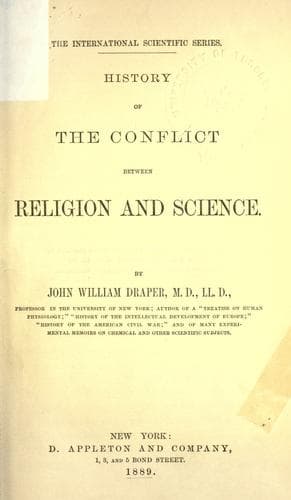
History of the Conflict Between Religion and ScienceDraper, John William
Religion
History of the Conflict Between Religion and Science
Draper, John William
Religion and science -- History
the right of giving away the benefices. At length it was affirmed that
he had the right of disposing of all church-offices without distinction,
and that the oath of obedience of a bishop to him implied political as
well as ecclesiastical subjection. In countries having a dual government
this increased the power of the spiritual element prodigiously.
Rights of every kind were remorselessly overthrown to complete this
centralization. In this the mendicant orders were most efficient aids.
It was the pope and those orders on one side, the bishops and the
parochial clergy on the other. The Roman court had seized the rights
of synods, metropolitans, bishops, national churches. Incessantly
interfered with by the legates, the bishops lost all desire to
discipline their dioceses; incessantly interfered with by the begging
monks, the parish priest had become powerless in his own village; his
pastoral influence was utterly destroyed by the papal indulgences and
absolutions they sold. The money was carried off to Rome.
Pecuniary necessities urged many of the popes to resort to such petty
expedients as to require from a prince, a bishop, or a grand-master, who
had a cause pending in the court, a present of a golden cup filled
with ducats. Such necessities also gave origin to jubilees. Sixtus IV.
established whole colleges, and sold the places at three or four hundred
ducats. Innocent VIII. pawned the papal tiara. Of Leo X. it was said
that he squandered the revenues of three popes, he wasted the savings
of his predecessor, he spent his own income, he anticipated that of his
successor, he created twenty-one hundred and fifty new offices and sold
them; they were considered to be a good investment, as they produced
twelve per cent. The interest was extorted from Catholic countries.
Nowhere in Europe could capital be so well invested as at Rome. Large
sums were raised by the foreclosing of mortgages, and not only by the
sale but the resale of offices. Men were promoted, for the purpose of
selling their offices again.
Public-domain text, read in full here on John Shaqi.
Reviews
Reviews
No reviews yet
Be the first to share your thoughts on this work.
Elsewhere in the archive
Join the Discussion
Join the discussion
Sign in to leave a comment or review.
Sign InorCreate an account