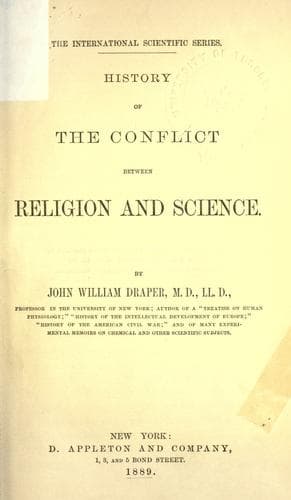
History of the Conflict Between Religion and ScienceDraper, John William
Religion
History of the Conflict Between Religion and Science
Draper, John William
Religion and science -- History
The two pillars on which the papal system now rested were the College of
Cardinals and the Curia. The cardinals, in 1059, had become electors of
the popes. Up to that time elections were made by the whole body of the
Roman clergy, and the concurrence of the magistrates and citizens
was necessary. But Nicolas II. restricted elections to the College of
Cardinals by a two-thirds vote, and gave to the German emperor the
right of confirmation. For almost two centuries there was a struggle
for mastery between the cardinal oligarchy and papal absolutism. The
cardinals were willing enough that the pope should be absolute in his
foreign rule, but they never failed to attempt, before giving him
their votes, to bind him to accord to them a recognized share in the
government. After his election, and before his consecration, he swore
to observe certain capitulations, such as a participation of revenues
between himself and the cardinals; an obligation that he would not
remove them, but would permit them to assemble twice a year to discuss
whether he had kept his oath. Repeatedly the popes broke their oath. On
one side, the cardinals wanted a larger share in the church government
and emoluments; on the other, the popes refused to surrender revenues or
power. The cardinals wanted to be conspicuous in pomp and extravagance,
and for this vast sums were requisite. In one instance, not fewer than
five hundred benefices were held by one of them; their friends and
retainers must be supplied, their families enriched. It was affirmed
that the whole revenues of France were insufficient to meet their
expenditures. In their rivalries it sometimes happened that no pope
was elected for several years. It seemed as if they wanted to show how
easily the Church could get on without the Vicar of Christ.
Public-domain text, read in full here on John Shaqi.
Reviews
Reviews
No reviews yet
Be the first to share your thoughts on this work.
Elsewhere in the archive
Join the Discussion
Join the discussion
Sign in to leave a comment or review.
Sign InorCreate an account