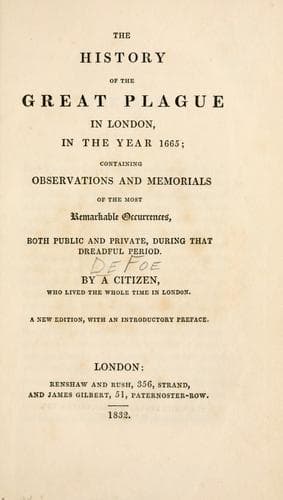
Historical fiction; London (England) -- History -- 17th century -- Fiction; Plague -- Fiction
But it was impossible to beat anything into the heads of the poor. They
went on with the usual impetuosity of their tempers, full of outcries
and lamentations when taken, but madly careless of themselves,
foolhardy, and obstinate, while they were well. Where they could get
employment, they pushed into any kind of business, the most dangerous
and the most liable to infection; and if they were spoken to, their
answer would be, "I must trust to God for that. If I am taken, then I am
provided for, and there is an end of me;" and the like. Or thus, "Why,
what must I do? I cannot starve. I had as good have the plague as perish
for want. I have no work: what could I do? I must do this, or beg."
Suppose it was burying the dead, or attending the sick, or watching
infected houses, which were all terrible hazards; but their tale was
generally the same. It is true, necessity was a justifiable, warrantable
plea, and nothing could be better; but their way of talk was much the
same where the necessities were not the same. This adventurous conduct
of the poor was that which brought the plague among them in a most
furious manner; and this, joined to the distress of their circumstances
when taken, was the reason why they died so by heaps; for I cannot say
I could observe one jot of better husbandry[287] among them (I mean the
laboring poor) while they were all well and getting money than there was
before; but[288] as lavish, as extravagant, and as thoughtless for
to-morrow as ever; so that when they came to be taken sick, they were
immediately in the utmost distress, as well for want as for sickness, as
well for lack of food as lack of health.
Public-domain text, read in full here on John Shaqi.
Reviews
Reviews
No reviews yet
Be the first to share your thoughts on this work.
Elsewhere in the archive
Join the Discussion
Join the discussion
Sign in to leave a comment or review.
Sign InorCreate an account