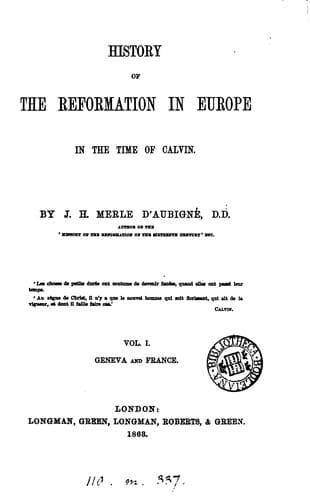
History of the Reformation in Europe in the Time of Calvin, Vol. 6 (of 8)Merle d'Aubigné, J. H. (Jean Henri)
History
History of the Reformation in Europe in the Time of Calvin, Vol. 6 (of 8)
Merle d'Aubigné, J. H. (Jean Henri)
Reformation
James was frightened; and as it was to please his prelates that he had
failed to keep his promise, it was his wish that the expenses of the
war should fall on them. He told them that, thanks to them, he was
going to war with the King of England, and demanded the subsidies which
they had promised. ‘If you do not furnish me with them,’ he added,
‘I shall have no choice but to confer with my uncle and satisfy his
wishes.’ This menace terrified the prelates; ‘for rather would they
have gone to hell.’[246] What would France say? What would the pope
say? thought the cardinal. The bishops promised mountains of gold.
After deliberation on the matter, they agreed to give the king fifty
thousand crowns a year so long as the war lasted. They added, that
their servants and other dependents who were exempt from military
service would take up arms. These promises filled the heart of the
rash young monarch with confidence and pride. Troops were sent to
Jedburgh and to Kelso, and the priests and all their party were pluming
themselves on their wealth and their power, and talking of nothing
but their victory. They were mad with joy, and were already dreaming
of again bringing England under the papal sway. It was possible for
an instant to suppose that they were right. The parliament of England
had not shown itself so forward as the clergy of Scotland; its members
had closed their ears to Henry’s demands for money. This slackened
his preparations for war. There were, however, some troops on the
frontier, and they formed the design of seizing Jedburgh. The earl
Angus and Sir George Douglas, his brother, who had been banished from
Scotland for some years, joined these troops, which numbered four
thousand men. But the Scots had taken their measures. Lord Huntley, at
the head of a large force, encountered the English troops at Halidon
on August 24. The fight was already begun, when another Scottish party
appeared. The English, perceiving that they were in danger of being
surrounded, retreated. Only a few were killed, but very many were taken
prisoners.[247]
There was no longer any limit to the joy of prelate and priest. They
encouraged the king; they vaunted themselves as if they had in person
gained a victory. In bishops’ palaces, in the parsonages of priests,
and in the convents of monks, nothing was heard but shouts of triumph.
‘All is ours,’ said they; ‘they are but heretics. If we be a thousand
and they ten thousand, they dare not fight. France shall enter the
one part and we the other, and so shall England be conquered within a
year.’[248]
[Sidenote: PROJECTS OF HENRY VIII.]
Public-domain text, read in full here on John Shaqi.
Reviews
Reviews
No reviews yet
Be the first to share your thoughts on this work.
Elsewhere in the archive
Join the Discussion
Join the discussion
Sign in to leave a comment or review.
Sign InorCreate an account