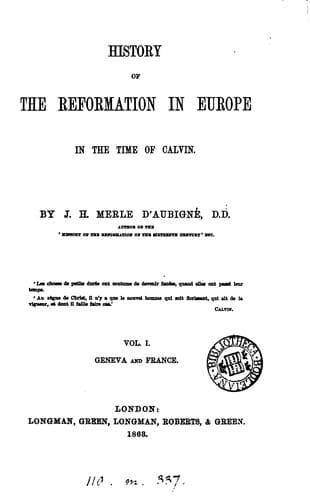
History of the Reformation in Europe in the Time of Calvin, Vol. 6 (of 8)Merle d'Aubigné, J. H. (Jean Henri)
History
History of the Reformation in Europe in the Time of Calvin, Vol. 6 (of 8)
Merle d'Aubigné, J. H. (Jean Henri)
Reformation
fundamentally one and the same faith.’ On the following day, Capito
coming to the support of his colleague, preached a sermon in which he
endeavored to show that Zwingli and Œcolampadius were in agreement with
Luther. They were so on the essential point of seeking and finding in
the supper a true communion with the Saviour.
[Sidenote: BUCER’S VIEWS.]
Megander had been charged with the duty of speaking on behalf of the
synod. Brevity and moderation had been recommended, lest any imprudent
word should give rise to a dispute. For him this task was not an easy
one. In fact, the next day he attacked Bucer and Capito with some
vehemence, upbraiding them for being with Luther rather than with the
Swiss, and with having, in other places, signed _certain acts_ which
the Swiss could not sign. ‘I have,’ said he, in drawing to a close,
‘some letters in which Bucer is spoken of. However, I think better
of him than those letters, and I should be pleased if we could agree
with him.’ Unhappily, they were far enough from such agreement. The
discussion grew warm. ‘You teach children in your catechism,’ said
Bucer, ‘to receive a sign in the supper, without reminding them of the
thing signified.’ ‘How then,’ exclaimed some of the Bernese ministers,
‘can you pretend that we hold the same faith?’ ‘Let Bucer speak,’
said Megander; ‘we will reply to him in the afternoon.’ But, in that
afternoon sitting, Bucer began anew to discourse to the Swiss about the
sacrament. ‘Enough of these homilies,’ said Megander, impatiently. ‘You
shut our mouths,’ said Bucer. ‘Let all those,’ said Megander, ‘who have
anything to say speak freely.’ But not one of the Bernese pastors rose.
A good understanding seemed impossible. The leaders on both sides
were angry and provoked each other. The vessel of concord, built by
the careful toil of the pastors of Strasburg, was violently tossed
and was going to founder in the Helvetic waters. Disagreeing in
doctrine, said one of those who were present on this occasion, there
was nothing between them but debate, a deadly plague in a Church. Where
were they to find the last plank, the desperate resource for escape
from shipwreck? They must founder, or be saved as if by miracle. A
young man, of only eight-and-twenty, but known for his love of the
Holy Scriptures and his slight respect for tradition, was sorrowfully
contemplating these discussions. It was John Calvin, he who called the
discussions ‘a deadly plague’ for the Church. His convictions were free
and spontaneous. They did not proceed, as with others, from a desire
for compromise, but from a perception of what is the essence of the
faith. He would not at any price have sought some expedient for the
union of minds by a sacrifice of truth. But he knew by experience the
power of the Holy Spirit; and he was the man called to stand between
the two armies, to get the sword returned to its sheath, and to found
unity and peace.
[Sidenote: INTERVENTION OF CALVIN.]
Public-domain text, read in full here on John Shaqi.
Reviews
Reviews
No reviews yet
Be the first to share your thoughts on this work.
Elsewhere in the archive
Join the Discussion
Join the discussion
Sign in to leave a comment or review.
Sign InorCreate an account