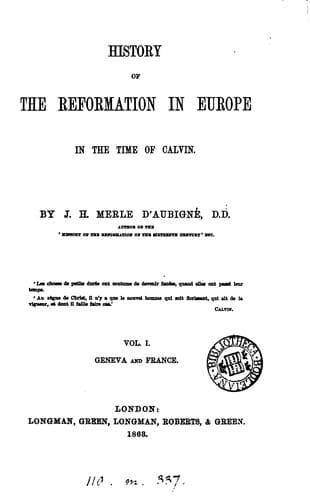
History of the Reformation in Europe in the Time of Calvin, Vol. 6 (of 8)Merle d'Aubigné, J. H. (Jean Henri)
History
History of the Reformation in Europe in the Time of Calvin, Vol. 6 (of 8)
Merle d'Aubigné, J. H. (Jean Henri)
Reformation
The worship appears to have been quiet and dignified; the scenes of
St. Gervais, at any rate, were not repeated here. The quarter in which
the cathedral stood, its imposing and solemn aspect, the composition
of the congregation, the magistrates, who doubtless were present in
large numbers, the grave countenance of the reformer, partly explain
this decorum. But the character of his speech, calm, simple, rich
in thought, luminous, and illuminating all the subjects of which he
treated, concise, awe-inspiring, and convincing, without the vivid and
popular flashes of Farel, doubtless contributed thereto to a great
extent. Nevertheless Calvin kept back nothing. ‘We protest before
you all,’ he said, ‘that we are not obstinate on the question about
bread, leavened or unleavened; that is a matter of indifference which
is left to the discretion of the Church. If we decline to administer
the supper, it is because we are in a great difficulty which prompts
us to this course.’ Then he spoke of the divisions, the bands of men,
the blasphemies, the profligacies, disorders, abominations, mockery of
God and his Gospel, the troubles and the sects which prevailed in the
town. ‘For,’ he said, ‘in public, and without any kind of punishment
being inflicted for it, a thousand derisive speeches have been uttered
against the Word of God and likewise against the supper.’[635] He then
stated unreservedly the motives which deterred him from celebrating
the communion. But he does not appear to have gone further. He had
doubtless more than once in his discourses transgressed the limits
of moderation; but it seems that the solemnity of the occasion and
the dignity of the pulpit led him to suppress those violent phrases
with which his speech sometimes bristled. He had a difficult task
to accomplish. He was bound to make these people understand the
obligations imposed on them by the profession of Christianity. Every
member of a society has, in fact, certain duties to discharge, which
are essential to the very existence of the community; in the same
way, every member of the Church owes to it an edifying and blameless
life. Christians form but one body, and it is a matter of concern to
each of its members that God should be honored in them all. Evident
hypocrisy and shameless depravity, in any man making profession of
being a Christian, are an injury to the whole Christian society. Union
with God is incompatible with a state of sin; vice and virtue are two
things which never go together. To regard as a trifle and a matter
of indifference the implacable opposition which exists between truth
and falsehood, between holiness and licentiousness, so that the one
or the other may be pursued without any ground for preference, is the
degradation of humanity and the scandal of scandals. If this mode of
thought prevail, the Christian Church is in a state of suffering;
it must be defended, it must be saved; and a Church unwilling to be
defended would be in a very unhealthy condition.
Public-domain text, read in full here on John Shaqi.
Reviews
Reviews
No reviews yet
Be the first to share your thoughts on this work.
Elsewhere in the archive
Join the Discussion
Join the discussion
Sign in to leave a comment or review.
Sign InorCreate an account