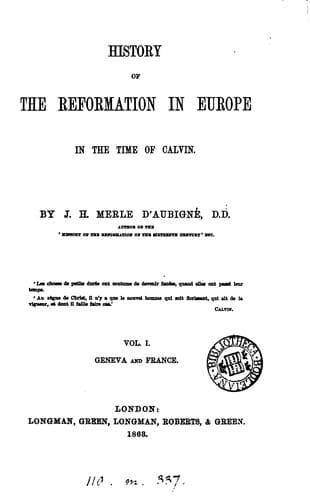
History of the Reformation in Europe in the Time of Calvin, Vol. 6 (of 8)Merle d'Aubigné, J. H. (Jean Henri)
History
History of the Reformation in Europe in the Time of Calvin, Vol. 6 (of 8)
Merle d'Aubigné, J. H. (Jean Henri)
Reformation
This discourse was severe; but the evil was great. It is useless to
deny it; the evidence is too positive. All the people, indeed, were
not guilty of these disorders and mockeries; but it happened then, as
it too often happens, that the agitators took the upper hand and good
men held their peace. We must also observe what Calvin said, that he
feared a profanation of the mystery of the supper, _unless the people
were better disposed_. He allows, therefore, a better disposition of
the people; he desires it; and then, he is certainly ready to celebrate
the sacred feast. As to his assertion that his colleagues and he
_had done all that in them lay_ to obey the magistrates, he indicates
clearly thereby that something _did not lie in their power_; to wit,
to act against their conscience and the command of God. Many in their
own time blamed them for this; but who now will make it a matter of
reproach? The most strenuous upholders of the union of church and state
say themselves, ‘That no state authority ought to interfere with any
man’s religious belief. If such a principle were really involved in
the maintenance of an established church, I should probably have been
found on the other side.’[666] No man, in our days, will censure the
reformers. In maintaining the independence of the faith, they did what
they were bound to do.
The council of Berne, which was not swayed by passion, like that of
Geneva, saw clearly into these matters, and was impressed with a sense
of the danger which was impending over their allies. Without loss of
time, they wrote the same day to their ‘singular good friends and
loyal fellow-citizens’: ‘Masters G. Farel and Calvin have this day
appeared before us and made the complaints comprised in the enclosed
schedule. We heard them with much sorrow of heart, for if these things
have actually taken place, they cause great offence and will turn _to
the dishonor of the Christian religion_. For this cause we earnestly
beg you, and in brotherly affection admonish and require you, to
abate the severity with which you deal with Farel and Calvin, for the
love of us and to avoid scandal. What we wrote touching conformity in
matters of ceremonial, we wrote from affection and not by any means
to constrain you. But you must know _that the troubles which exist at
the present time in your town, and the rigorous treatment which you
adopt towards your preachers, have been very offensive to us, and
that our enemies are greatly rejoiced at it_. Herein you will do us
a most welcome favor.’[667] This was the view of the lords of Berne,
themselves opponents of Calvin; and they might have a grudge against
him, particularly in this business, on the subject of unleavened bread.
But their views were loftier, wiser, and more profoundly religious and
politic than those of Richardet and his friends.
[Sidenote: REPLY OF THE GENEVESE COUNCIL.]
Public-domain text, read in full here on John Shaqi.
Reviews
Reviews
No reviews yet
Be the first to share your thoughts on this work.
Elsewhere in the archive
Join the Discussion
Join the discussion
Sign in to leave a comment or review.
Sign InorCreate an account