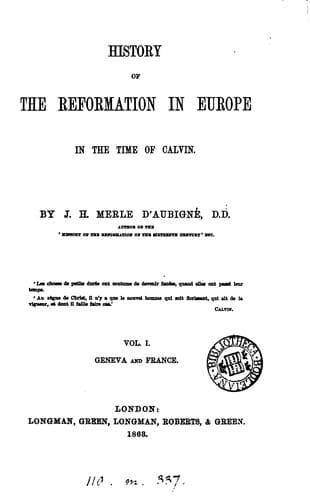
History of the Reformation in Europe in the Time of Calvin, Vol. 6 (of 8)Merle d'Aubigné, J. H. (Jean Henri)
History
History of the Reformation in Europe in the Time of Calvin, Vol. 6 (of 8)
Merle d'Aubigné, J. H. (Jean Henri)
Reformation
Sir George, startled at this unlooked-for news,
ran to the apartment of the king; he knocked, and as no one answered,
he had the door burst open. He looked round on all sides and exclaimed,
‘Treachery! the king is fled!’ He gave instant notice to his brother,
the earl of Angus, and sent messengers in all directions with orders
to arrest the king wheresoever he might be found. All was useless. The
tidings of this event being spread abroad, the enemies of the Douglases
hastened in crowds to Stirling. Without loss of time the king called
together the parliament and got a decree of banishment issued against
Angus. The latter, cast down suddenly from the height of greatness,
made his escape into England, passing safely through many difficulties
and dangers.
From that time James V. bore rule himself, so far at least as the
priests would allow him. In the character of this strange prince were
combined insatiable ambition and unparalleled feebleness, kindliness
full of affability and implacable resentment, a great regard for
justice and violent passions, an eager desire to protect the weak from
the oppression of the powerful and fits of rage which did not spare
even the lowly. The king reigned, but the clergy governed. As the
aim of James V. was to humble the nobles, a close alliance with the
clergy was a necessity for him, and once having taken the side of the
priests, he went to great lengths. The archbishops of St. Andrews and
Glasgow, the bishop of Dunkeld, and the abbot of Holyrood were placed
at the head of the government, and the most distinguished members
of the aristocracy were immediately imprisoned or sent into exile.
No Douglas, and no partisan even of that house, was allowed to come
within twelve miles of the court. Persecution attacked at the same
time the evangelical Christians; men who might have elevated their
country perished on the scaffold. The course pursued by the priests
tended to defeat their own end. The nobles, exasperated by the tyranny
of the bishops, began to feel the aversion for the Church of Rome
which they felt for its leading men. It was not indeed from the Romish
religion that they broke off, but only from an ambitious and merciless
hierarchy. But erelong we shall find the nobles, ever more and
more provoked by the clergy, beginning to lend a willing ear to the
evangelical doctrine of those who opposed the clergy.
[Sidenote: ALESIUS.]
Public-domain text, read in full here on John Shaqi.
Reviews
Reviews
No reviews yet
Be the first to share your thoughts on this work.
Join the Discussion
Join the discussion
Sign in to leave a comment or review.
Sign InorCreate an account