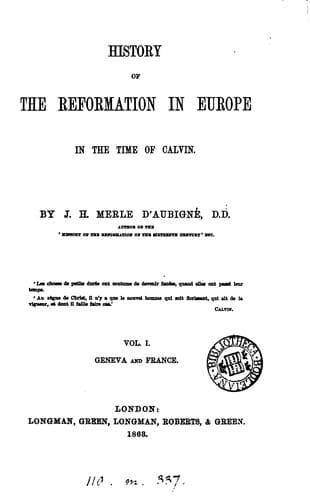
History of the Reformation in Europe in the Time of Calvin, Vol. 8 (of 8)Merle d'Aubigné, J. H. (Jean Henri)
History
History of the Reformation in Europe in the Time of Calvin, Vol. 8 (of 8)
Merle d'Aubigné, J. H. (Jean Henri)
Reformation
He also endeavored to render as harmless as possible the book 'A
necessary doctrine and erudition for any Christian Man,' which
was published in 1543,[420] and was called 'The King's Book,' to
distinguish it from 'The Institution of a Christian Man,' which was
called 'The Bishop's Book.' This book of the king held a middle course
between the doctrine of the pope and that of the Reformation, leaning,
however, towards the latter. The grace and the mercy of God were
established as the principle of our justification. Some reforms were
introduced with respect to the worship of images and of the saints;
the article on purgatory was omitted; large rights were granted to the
church of every country; the vulgar tongue was recognized as necessary
to meet the religious wants of the people. Still, many obscurities and
errors were to be found in this book.
An event was approaching which would draw the king more decisively to
the side of the Reformation. Although he had now made five successive
marriages, and had experienced, undoubtedly by his own fault, only a
long series of disappointments and vexations, he was once more looking
for a wife. A law which had been passed after the discovery of the
misconduct of Catherine Howard terrified the maidens of England, even
the most innocent among them; they would have been afraid of falling
victims to the unjust suspicions of Henry VIII. He now determined to
marry a widow.
Catherine Parr, the widow of Lord Latimer, was now at the court.
She was a woman of good sense, of virtuous and amiable character,
beautiful, and agreeable in manners,[421] and was past the prime
of youth. She had, however, one defect which often attaches to
noble characters,--a want of prudence. She did not always perceive
and practise what was best to be done under certain circumstances.
Especially was she wanting in that human prudence, so necessary at the
court, and particularly to the wife of Henry VIII.; and hereby she was
exposed to great danger. The king was now in a declining state; and his
bodily infirmities as well as his irritable temper made it a necessity
that some gentle and very considerate wife should take care of him. He
married the noble dowager[422] on July 12, 1543; and he found in her
the affection and the kind attentions of a virtuous lady. The crown
was to Catherine but a poor compensation; but she discharged her duty
devotedly, and shed some rays of sunshine over the last years of the
king. The queen was favorable to the Reformation, as was likewise her
brother, who was created earl of Essex, and her uncle, made Lord Parr
of Horton. Cranmer and all those who wished for a real reformation
were on the side of the new queen; while Gardiner and his party,
now including the new chancellor, Wriothesley, taking alarm at this
influence which was opposed to them, became more zealous than ever
in the maintenance of the old doctrine. These men felt that the power
Public-domain text, read in full here on John Shaqi.
Reviews
Reviews
No reviews yet
Be the first to share your thoughts on this work.
Elsewhere in the archive
Join the Discussion
Join the discussion
Sign in to leave a comment or review.
Sign InorCreate an account