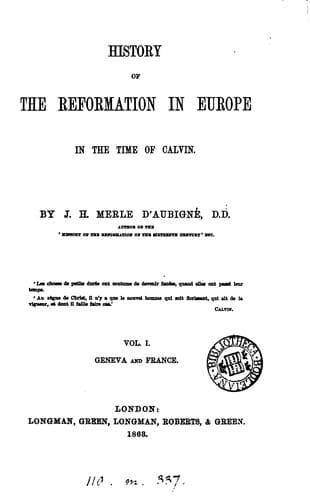
History of the Reformation in Europe in the Time of Calvin, Vol. 8 (of 8)Merle d'Aubigné, J. H. (Jean Henri)
History
History of the Reformation in Europe in the Time of Calvin, Vol. 8 (of 8)
Merle d'Aubigné, J. H. (Jean Henri)
Reformation
three leaders were all sentenced to the same punishment, the penalty of
high treason to a supreme head. This took place in February, 1536. In
the barbarous period of the Middle Ages imagination had been racked for
the invention of the most cruel punishments. These three wretches were
conducted to the great square of Munster, where Bockhold, as king,
had borne the sceptre and the triple crown, and his executive minister
Knipperdolling the sword. They were then laid out naked; and their
bodies were plucked to pieces with hot pincers, until at length, amidst
hideous tortures, pincers, fire, sword and excruciating sufferings had
put an end to their life.[531] This process lasted an hour. Cochlæus
himself exclaims,--'Cruel, horrible punishment! a terrible example
to all rebels!' Knipperdolling and Crechting bore with courage the
frightful infliction, and Bockhold, apparently recovering good sense,
was determined not to die the death of a coward. Not a groan escaped
him. After he had breathed his last they pierced his heart with a
dagger.
It was Philip of Hesse and his soldiers of the reformed party who
chiefly contributed to put an end to the disorders and cruelties of
which Munster had been the scene. The only result of this episode for
Protestantism was to demonstrate that it had no connection with the
fanaticism of these would-be inspired ones. Protestant opinion was on
this occasion distinguished by various characteristic features. Its
intention was that punishment should be inflicted not for the religious
doctrine of the enthusiasts, but only for their rebellion and other
ordinary crimes. There have been, indeed, and there are especially
at the present time a large number of pious and zealous Christians
who advocate adult baptism; and we are bound to respect them although
we do not share their views. Moreover the baptism practised by the
enthusiasts of Munster, was not that of the sect of Baptists; it was a
proceeding which denoted adhesion to the fanatical system the triumph
of which they pretended to insure, a ceremony such as is adopted in
many secret societies. The essential characteristics of their system
were their alleged visions, their unquestionable licentiousness, the
confusion which they brought upon the institutions of social life,
their tyranny and their cruelty.
Public-domain text, read in full here on John Shaqi.
Reviews
Reviews
No reviews yet
Be the first to share your thoughts on this work.
Elsewhere in the archive
Join the Discussion
Join the discussion
Sign in to leave a comment or review.
Sign InorCreate an account