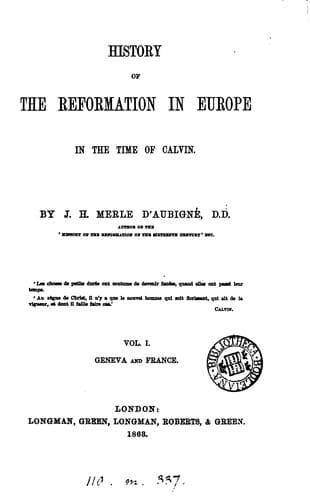
History of the Reformation in Europe in the Time of Calvin, Vol. 8 (of 8)Merle d'Aubigné, J. H. (Jean Henri)
History
History of the Reformation in Europe in the Time of Calvin, Vol. 8 (of 8)
Merle d'Aubigné, J. H. (Jean Henri)
Reformation
'Item quoniam diebus nostris faciens nobiscum Dominus
misericordiam suam de absconditis terræ, uberrimas pretiosi
aluminis venas antea nunquam inventas miraculo quodam in
montibus nostris, qui in patrimonio B. Petri in Tuscia prope
arcem Tolpham sunt patefecit, volens videlicet, ne ultra
ex fidelium pecunia Turchorum in eos persecutio cresceret,
sed ilia ad defensionem nostram uti possemus, justum et
pietati suæ placitum reputantes, fructum omnem, qui antehac
ex comportato in Christianitatem transmarino alumine penes
impios Turchos in Christianorum exitium erat, modo ad nos in
suffragium ecclesiæ catholicæ transeat, præsertim cum alumen
nostrum, magistra experientia, virtute perfectius, pretio
vilius, numero autem sit adeo abundans, ut usui Christianorum
in omnem partem satisfacere possit, ex parte omnipotentis Dei
Patris, et Filii, et Spiritus sancti, ac nostra ex hoc sancto
tribunali apostolica voce hortamur atque requirimus omnes,
et singulos profitentes nomen Christianum, ne posthac alumen
a Turchis aliisque infidelibus emant, &c. Dat. Romæ apud S.
Petrum anno MCDLXIII. vii. id. Aprilis, pontificatus nostri
anno v.' (Raynaldus, 'Annales Ecclesiastici,' tom. 29, p. 376).
In his 'History of Inventions, Discoveries,' &c. (_Bohn's Standard
Library_), Beckmann, who, in treating of Alum, quotes several accounts
of the works at Tolfa, says:--'The Pope himself has left us a very
minute history of this discovery, and of the circumstances which gave
rise to it;' and, alluding to the conflicting statements respecting the
discoverer, he adds:--'But as I do not wish to ascribe a falsehood to
the Pontiff, I am of opinion that the history of this discovery must
have been best known to him. He has not, indeed, established the year
with sufficient correctness; but we may conclude from his relation that
it must have been 1460 or 1465.[539] The former is the year given by
Felician Bussi; and the latter that given in the History of the City
of Civita Vecchia.' Beckmann's rendering of the Pope's history, though
the account is here and there open to criticism, throws much light on
the passage in the Indulgence and is otherwise very interesting. It
is in these terms:--'A little before that period came to Rome John di
Castro, with whom the Pontiff had been acquainted when he carried on
trade at Basle, and was banker to Pope Eugenius. His father, Paul,
was a celebrated lawyer of his time, who sat many years in the chair
of Padua, and filled all Italy with his decisions; for lawsuits were
frequently referred to him, and judges paid great respect to his
authority, as he was a man of integrity and sound learning. At his
death he left considerable riches, and two sons arrived to the age of
manhood, the elder of whom, following the profession of the father,
acquired a very extensive knowledge of law. The other, who was a man
of genius, and who applied more to study, made himself acquainted with
Public-domain text, read in full here on John Shaqi.
Reviews
Reviews
No reviews yet
Be the first to share your thoughts on this work.
Elsewhere in the archive
Join the Discussion
Join the discussion
Sign in to leave a comment or review.
Sign InorCreate an account