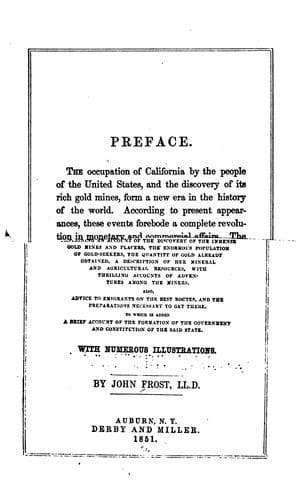
History of the State of California: From the Period of the Conquest by Spain to Her Occupation by the United States of AmericaFrost, John
History
History of the State of California: From the Period of the Conquest by Spain to Her Occupation by the United States of America
Frost, John
California -- Gold discoveries; California -- History
SEC. 17. Foreigners who are, or who may hereafter become, _bona fide_
residents of this State, shall enjoy the same rights in respect to the
possession, enjoyment, and inheritance of property, as native born
citizens.
SEC. 18. _Neither slavery, nor involuntary servitude, unless for the
punishment of crimes, shall ever be tolerated in this State._
SEC. 19. The right of the people to be secure in their persons,
houses, papers and effects, against unreasonable seizures and
searches, shall not be violated; and no warrant shall issue but on
probable cause, supported by oath or affirmation, particularly
describing the place to be searched, and the persons and things to be
seized.
SEC. 20. Treason against the State shall consist only in levying war
against it, adhering to its enemies, or giving them aid and comfort.
No person shall be convicted of treason, unless on the evidence of two
witnesses to the same overt act, or confession in open court.
SEC. 21. This enumeration of rights shall not be construed to impair
or deny others retained by the people.
ARTICLE II.
RIGHT OF SUFFRAGE.
SEC. 1. Every white male citizen of the United States, and every white
male citizen of Mexico, who shall have elected to become a citizen of
the United States, under the treaty of peace exchanged and ratified at
Queretaro, on the 30th day of May, 1848, of the age of twenty-one
years, who shall have been a resident of the State six months next
preceding the election, and the county or district in which he claims
his vote thirty days, shall be entitled to vote at all elections which
are now or hereafter may be authorized by law: Provided, that nothing
herein contained shall be construed to prevent the Legislature, by a
two-thirds concurrent vote, from admitting to the right of suffrage,
Indians or the descendants of Indians, in such special cases as such a
proportion of the legislative body may deem just and proper.
SEC. 2. Electors shall, on all cases except treason, felony, or breach
of the peace, be privileged from arrest on the days of the election,
during their attendance at such election, going to and returning
therefrom.
SEC. 3. No elector shall be obliged to perform militia duty on the day
of election, except in time of war or public danger.
SEC. 4. For the purpose of voting, no person shall be deemed to have
gained or lost a residence by reason of his presence or absence while
employed in the service of the United States; nor while engaged in the
navigation of the waters of this State, or of the United States, or of
the high seas; nor while a student of any seminary of learning; nor
while kept at any almshouse, or other asylum, at public expense; nor
while confined in any public prison.
SEC. 5. No idiot or insane person, or person convicted of any infamous
crime, shall be entitled to the privileges of an elector.
SEC. 6. All elections by the people shall be by ballot.
ARTICLE III.
DISTRIBUTION OF POWERS.
Public-domain text, read in full here on John Shaqi.
Reviews
Reviews
No reviews yet
Be the first to share your thoughts on this work.
Elsewhere in the archive
Join the Discussion
Join the discussion
Sign in to leave a comment or review.
Sign InorCreate an account