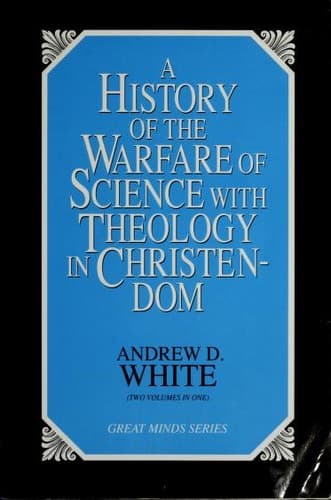
History of the Warfare of Science with Theology in ChristendomWhite, Andrew Dickson
Religion
History of the Warfare of Science with Theology in Christendom
White, Andrew Dickson
Religion and science -- History
As to sculpture, we have not only the great Sphinx of Gizeh, so
marvellous in its boldness and dignity, dating from the very first
period of Egyptian history, but we have ranges of sphinxes, heroic
statues, and bas-reliefs, showing that even in the early ages this
branch of art had reached an amazing development.
As regards the perfection of these, Lubke, the most eminent German
authority on plastic art, referring to the early works in the tombs
about Memphis, declares that, "as monuments of the period of the fourth
dynasty, they are an evidence of the high perfection to which the
sculpture of the Egyptians had attained." Brugsch declares that "every
artistic production of those early days, whether picture, writing, or
sculpture, bears the stamp of the highest perfection in art." Maspero,
the most eminent French authority in this field, while expressing his
belief that the Sphinx was sculptured even before the time of Mena,
declares that "the art which conceived and carved this prodigious statue
was a finished art--an art which had attained self-mastery and was sure
of its effects"; while, among the more eminent English authorities,
Sayce tells us that "art is at its best in the age of the
pyramid-builders," and Sir James Fergusson declares, "We are startled to
find Egyptian art nearly as perfect in the oldest periods as in any of
the later."
The evidence as to the high development of Egyptian sculpture in the
earlier dynasties becomes every day more overwhelming. What exquisite
genius the early Egyptian sculptors showed in their lesser statues is
known to all who have seen those most precious specimens in the museum
at Cairo, which were wrought before the conventional type was adopted in
obedience to religious considerations.
In decorative and especially in ceramic art, as early as the fourth
and fifth dynasties, we have vases, cups, and other vessels showing
exquisite beauty of outline and a general sense of form almost if not
quite equal to Etruscan and Grecian work of the best periods.
Public-domain text, read in full here on John Shaqi.
Reviews
Reviews
No reviews yet
Be the first to share your thoughts on this work.
Elsewhere in the archive
Join the Discussion
Join the discussion
Sign in to leave a comment or review.
Sign InorCreate an account