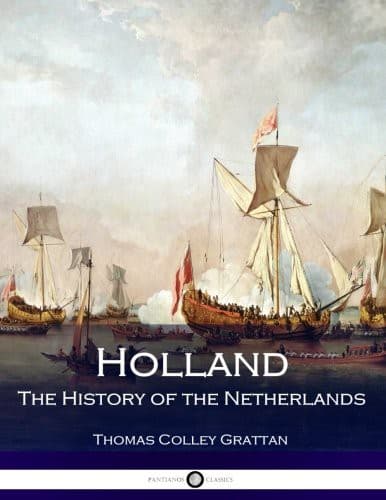
Holland: The History of the NetherlandsGrattan, Thomas Colley
History
Holland: The History of the Netherlands
Grattan, Thomas Colley
Netherlands -- History
The rapid spread of enlightenment on religious subjects soon
converted the manufactories and workshops of Flanders into so
many conventicles of reform; and the clear-sighted artisans fled
in thousands from the tyranny of Alva into England, Germany, and
Holland--those happier countries, where the government adopted and
went hand in hand with the progress of rational belief. Commerce
followed the fate of manufactures. The foreign merchants one
by one abandoned the theatre of bigotry and persecution; and
even Antwerp, which had succeeded Bruges as the great mart of
European traffic, was ruined by the horrible excesses of the
Spanish soldiery, and never recovered from the shock. Its trade,
its wealth, and its prosperity, were gradually transferred to
Amsterdam, Rotterdam, and the towns of Holland and Zealand; and
the growth of Dutch commerce attained its proud maturity in the
establishment of the India Company in 1596, the effects of which
we shall have hereafter more particularly to dwell on.
The exciting and romantic enterprises of the Portuguese and Spanish
navigators in the fifteenth and sixteenth centuries roused all
the ardor of other nations for those distant adventures; and the
people of the Netherlands were early influenced by the general
spirit of Europe. If they were not the discoverers of new worlds,
they were certainly the first to make the name of European respected
and venerated by the natives.
Animated by the ardor which springs from the spirit of freedom
and the enthusiasm of success, the United Provinces labored for
the discovery of new outlets for their commerce and navigation.
The government encouraged the speculations of individuals, which
promised fresh and fertile sources of revenue, so necessary for
the maintenance of the war. Until the year 1581 the merchants of
Holland and Zealand were satisfied to find the productions of
India at Lisbon, which was the mart of that branch of trade ever
since the Portuguese discovered the passage by the Cape of Good
Hope. But Philip II., having conquered Portugal, excluded the United
Provinces from the ports of that country; and their enterprising
mariners were from that period driven to those efforts which
rapidly led to private fortune and general prosperity. The English
had opened the way in this career; and the states-general having
offered a large reward for the discovery of a northwest passage,
frequent and most adventurous voyages took place. Houtman, Le
Maire, Heemskirk, Ryp, and others, became celebrated for their
enterprise, and some for their perilous and interesting adventures.
Public-domain text, read in full here on John Shaqi.
Reviews
Reviews
No reviews yet
Be the first to share your thoughts on this work.
Elsewhere in the archive
Join the Discussion
Join the discussion
Sign in to leave a comment or review.
Sign InorCreate an account