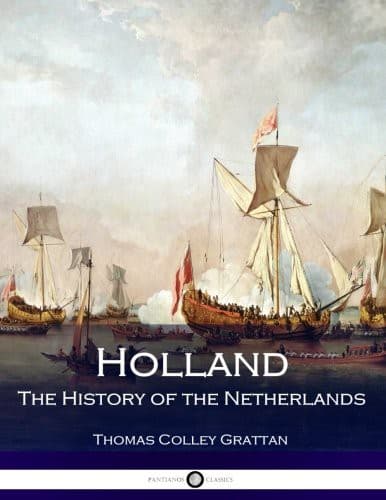
Holland: The History of the NetherlandsGrattan, Thomas Colley
History
Holland: The History of the Netherlands
Grattan, Thomas Colley
Netherlands -- History
The last avenger of Friesland liberty and of the national idols
was the illustrious Witikind, to whom the chronicles of his country
give the title of first azing, or judge. This intrepid chieftain
is considered as a compatriot, not only by the historians of
Friesland, but by those of Saxony; both, it would appear, having
equal claims to the honor; for the union between the two peoples
was constantly strengthened by intermarriages between the noblest
families of each. As long as Witikind remained a pagan and a
freeman, some doubt existed as to the final fate of Friesland;
but when by his conversion he became only a noble of the court
of Charlemagne, the slavery of his country was consummated.
CHAPTER III
FROM THE CONQUEST OF FRIESLAND TO THE FORMATION OF HOLLAND
A.D. 800--1000
Even at this advanced epoch of foreign domination, there remained
as great a difference as ever between the people of the high
grounds and the inhabitants of the plain. The latter were, like
the rest, incorporated with the great monarchy; but they preserved
the remembrance of former independence, and even retained their
ancient names. In Flanders, Menapians and Flemings were still
found, and in the country of Antwerp the Toxandrians were not
extinct. All the rest of the coast was still called Friesland. But
in the high grounds the names of the old inhabitants were lost.
Nations were designated by the names of their rivers, forests, or
towns. They were classified as accessories to inanimate things;
and having no monuments which reminded them of their origin,
they became as it were without recollections or associations;
and degenerated, as may be almost said, into a people without
ancestry.
The physical state of the country had greatly changed from the
times of Cæsar to those of Charlemagne. Many parts of the forest
of the Ardennes had been cut down or cleared away. Civilization
had only appeared for a while among these woods, to perish like
a delicate plant in an ungenial clime; but it seemed to have
sucked the very sap from the soil, and to have left the people
no remains of the vigor of man in his savage state, nor of the
desperate courage of the warriors of Germany. A race of serfs now
cultivated the domains of haughty lords and imperious priests.
The clergy had immense possessions in this country; an act of
the following century recognizes fourteen thousand families of
vassals as belonging to the single abbey of Nivelle. Tournay and
Tongres, both Episcopal cities, were by that title somewhat less
oppressed than the other ancient towns founded by the Romans; but
they appear to have possessed only a poor and degraded population.
Public-domain text, read in full here on John Shaqi.
Reviews
Reviews
No reviews yet
Be the first to share your thoughts on this work.
Join the Discussion
Join the discussion
Sign in to leave a comment or review.
Sign InorCreate an account