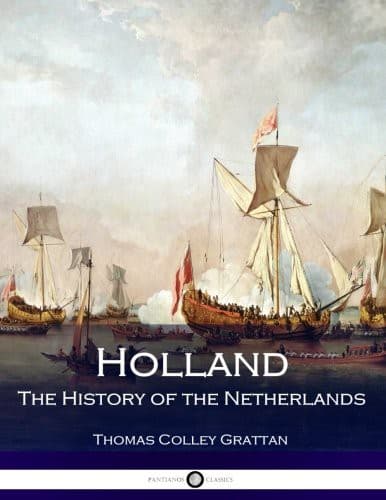
Holland: The History of the NetherlandsGrattan, Thomas Colley
History
Holland: The History of the Netherlands
Grattan, Thomas Colley
Netherlands -- History
Charles II. died most unexpectedly in the year 1685; and his
obstinately bigoted and unconstitutional successor, James II.,
seemed, during a reign of not four years' continuance, to rush
wilfully headlong to ruin. During this period, the Prince of
Orange had maintained a most circumspect and unexceptionable
line of conduct; steering clear of all interference with English
affairs; giving offence to none of the political factions; and
observing in every instance the duty and regard which he owed to
his father-in-law. During Monmouth's invasion he had despatched
to James's assistance six regiments of British troops which were
in the Dutch service, and he offered to take the command of the
king's forces against the rebels. It was from the application
of James himself that William took any part in English affairs;
for he was more widely and much more congenially employed in the
establishment of a fresh league against France. Louis had aroused
a new feeling throughout Protestant Europe by the revocation
of the Edict of Nantes. The refugees whom he had driven from
their native country inspired in those in which they settled
hatred of his persecution as well as alarm of his power. Holland
now entered into all the views of the Prince of Orange. By his
immense influence he succeeded in forming the great confederacy
called the League of Augsburg, to which the emperor, Spain, and
almost every European power but England became parties.
James gave the prince reason to believe that he too would join
in this great project, if William would in return concur in his
views of domestic tyranny; but William wisely refused. James, much
disappointed, and irritated by the moderation which showed his
own violence in such striking contrast, expressed his displeasure
against the prince, and against the Dutch generally, by various
vexatious acts. William resolved to maintain a high attitude;
and many applications were made to him by the most considerable
persons in England for relief against James's violent measures,
and which there was but one method of making effectual. That method
was force. But as long as the Princess of Orange was certain of
succeeding to the crown on her father's death, William hesitated
to join in an attempt that might possibly have failed and lost
her her inheritance. But the birth of a son, which, in giving
James a male heir, destroyed all hope of redress for the kingdom,
decided the wavering, and rendered the determined desperate.
The prince chose the time for his enterprise with the sagacity,
arranged its plan with the prudence, and put it into execution
with the vigor, which were habitual qualities of his mind.
Public-domain text, read in full here on John Shaqi.
Reviews
Reviews
No reviews yet
Be the first to share your thoughts on this work.
Elsewhere in the archive
Join the Discussion
Join the discussion
Sign in to leave a comment or review.
Sign InorCreate an account