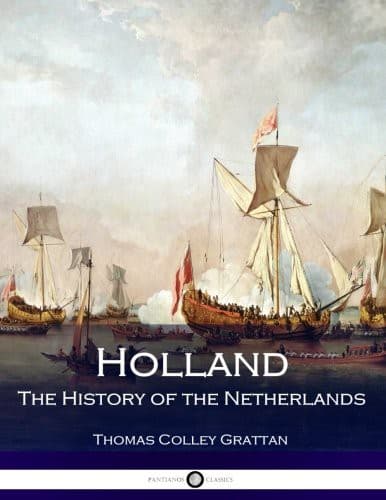
Holland: The History of the NetherlandsGrattan, Thomas Colley
History
Holland: The History of the Netherlands
Grattan, Thomas Colley
Netherlands -- History
Negapatam, on the coast of Coromandel, and the free navigation of
the Indian seas, were ceded to England, who occupied the other
various colonies taken during the war.
Opinion was now rapidly opening out to that spirit of intense
inquiry which arose in France, and threatened to sweep before
it not only all that was corrupt, but everything that tended
to corruption. It is in the very essence of all kinds of power
to have that tendency, and, if not checked by salutary means,
to reach that end. But the reformers of the last century, new
in the desperate practice of revolutions, seeing its necessity,
but ignorant of its nature, neither did nor could place bounds
to the careering whirlwind that they raised. The well-meaning
but intemperate changes essayed by Joseph II. in Belgium had a
considerable share in the development of free principles, although
they at first seemed only to excite the resistance of bigotry and
strengthen the growth of superstition. Holland was always alive
to those feelings of resistance, to established authority which
characterize republican opinions; and the general discontent at the
result of the war with England gave a good excuse to the pretended
patriotism which only wanted change, while it professed reform.
The stadtholder saw clearly the storm which was gathering, and
which menaced his power. Anxious for the present, and uncertain
for the future, he listened to the suggestions of England, and
resolved to secure and extend by foreign force the rights of
which he risked the loss from domestic faction.
Public-domain text, read in full here on John Shaqi.
Reviews
Reviews
No reviews yet
Be the first to share your thoughts on this work.
Elsewhere in the archive
Join the Discussion
Join the discussion
Sign in to leave a comment or review.
Sign InorCreate an account