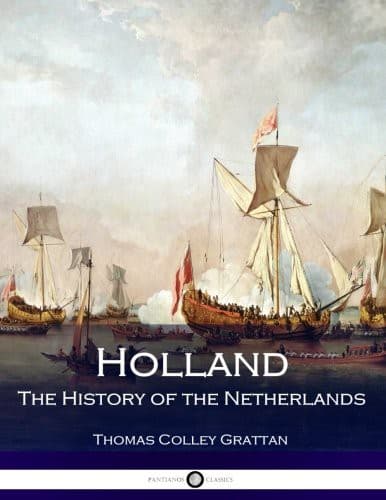
Holland: The History of the NetherlandsGrattan, Thomas Colley
History
Holland: The History of the Netherlands
Grattan, Thomas Colley
Netherlands -- History
The confederation acquired its perfect organization in the month
of February, 1566, on the tenth of which month its celebrated
manifesto was signed by its numerous adherents. The first name
affixed to this document was that of Philip de Marnix, lord of
St. Aldegonde, from whose pen it emanated; a man of great talents
both as soldier and writer. Numbers of the nobility followed him
on this muster-roll of patriotism, and many of the most zealous
royalists were among them. This remarkable proclamation of general
feeling consisted chiefly in a powerful reprehension of the illegal
establishment of the Inquisition in the Low Countries, and a
solemn obligation on the members of the confederacy to unite
in the common cause against this detested nuisance. Men of all
ranks and classes offered their signatures, and several Catholic
priests among the rest. The Prince of Orange, and the Counts
Egmont, Horn, and Meghem, declined becoming actual parties to
this bold measure; and when the question was debated as to the
most appropriate way of presenting an address to the stadtholderess
these noblemen advised the mildest and most respectful demeanor
on the part of the purposed deputation.
At the first intelligence of these proceedings, the duchess of
Parma, absorbed by terror, had no resource but to assemble hastily
such members of the council of state as were at Brussels; and she
entreated, by the most pressing letters, the Prince of Orange
and Count Horn to resume their places at this council. But three
courses of conduct seemed applicable to the emergency: to take up
arms; to grant the demands of the confederates; or to temporize
and to amuse them with a feint of moderation, until the orders
of the king might be obtained from Spain. It was not, however,
till after a lapse of four months that the council finally met
to deliberate on these important questions; and during this long
interval at such a crisis the confederates gained constant accessions
to their numbers, and completely consolidated their plans. The
opinions in the council were greatly divided as to the mode of
treatment toward those whom one party considered as patriots
acting in their constitutional rights, and the other as rebels
in open revolt against the king. The Prince of Orange and De
Berlaimont were the principal leaders and chief speakers on either
side. But the reasonings of the former, backed by the urgency of
events, carried the majority of the suffrages; and a promised
redress of grievances was agreed on beforehand as the anticipated
answer to the coming demands.
Public-domain text, read in full here on John Shaqi.
Reviews
Reviews
No reviews yet
Be the first to share your thoughts on this work.
Elsewhere in the archive
Join the Discussion
Join the discussion
Sign in to leave a comment or review.
Sign InorCreate an account