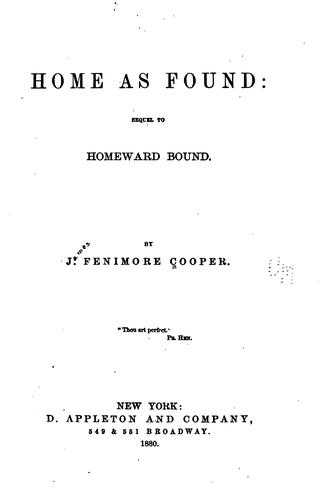
Home as Found: Sequel to "Homeward Bound"Cooper, James Fenimore
General
Home as Found: Sequel to "Homeward Bound"
Cooper, James Fenimore
United States -- Social life and customs -- Fiction
Templeton was properly in this equivocal condition, for while the
third generation of the old settlers were in active life, so many
passers-by came and went, that the influence of the latter nearly
neutralized that of time and the natural order of things. Its
population was pretty equally divided between the descendants of the
earlier inhabitants, and those who flitted like swallows and other
migratory birds. All of those who had originally entered the region
in the pride of manhood, and had been active in converting the
wilderness into the abodes of civilized men, if they had not been
literally gathered to their fathers, in a physical sense had been
laid, the first of their several races, beneath those sods that were
to cover the heads of so many of their descendants. A few still
remained among those who entered the wilderness in young manhood, but
the events of the first period we have designated, and which we have
imperfectly recorded in another work, were already passing into
tradition. Among these original settlers some portion of the feeling
that had distinguished their earliest communion with their neighbours
yet continued, and one of their greatest delights was to talk of the
hardships and privations of their younger days, as the veteran loves
to discourse of his marches, battles, scars, and sieges. It would be
too much to say that these persons viewed the more ephemeral part of
the population with distrust, for their familiarity with changes
accustomed them to new faces; but they had a secret inclination for
each other, preferred those who could enter the most sincerely into
their own feelings, and naturally loved that communion best, where
they found the most sympathy. To this fragment of the community
belonged nearly all there was to be found of that sort of sentiment
which is connected with locality; adventure, with them, supplying the
place of time; while the natives of the spot, wanting in the
recollections that had so many charms for their fathers, were not yet
brought sufficiently within the influence of traditionary interest,
to feel that hallowed sentiment in its proper force. As opposed in
feeling to these relics of the olden time, were the birds of passage
so often named, a numerous and restless class, that, of themselves,
are almost sufficient to destroy whatever there is of poetry, or of
local attachment, in any region where they resort.
Public-domain text, read in full here on John Shaqi.
Reviews
Reviews
No reviews yet
Be the first to share your thoughts on this work.
Elsewhere in the archive
Join the Discussion
Join the discussion
Sign in to leave a comment or review.
Sign InorCreate an account