Finally, civilization is not only a matter of local habitation, but a
matter of individual men. The great city is both determined by, and
determines, its environment; the great man is the product, and in turn
the producer, of the culture of his nation. The human race is gregarious
and sequacious, rather than individual and adventurous. Progress depends
upon the initiative of spirited and gifted men, rather than upon the
tardy movement of the mass, upon idea rather than force, upon spirit
rather than matter.
I preface my essay with these reflections because there may be readers
at first thought skeptical of even modest statements regarding Horace as
a force in the history of our culture and a contributor to our life
today. It is only when the continuity of history and the essential
simplicity and constancy of civilization are understood that the direct
and vital connection between past and present is seen, and the mind is
no longer startled and incredulous when the historian records that the
Acropolis has had more to do with the career of architecture than any
other group of buildings in the world, or that the most potent influence
in the history of prose is the Latin of Cicero, or that poetic
expression is more choice and many men appreciably saner and happier
because of a Roman poet dead now one thousand nine hundred and thirty
years.
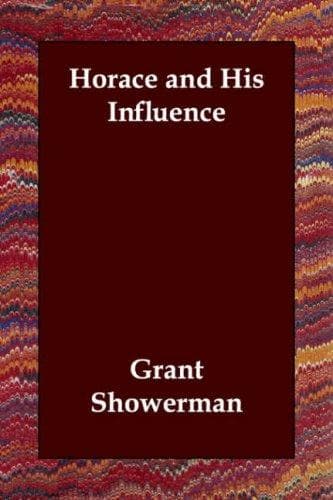
HORACE AND HIS
INFLUENCE
I. HORACE INTERPRETED
THE APPEAL OF HORACE
In estimating the effect of Horace upon his own and later times, we must
take into account two aspects of his work. These are, the forms in which
he expressed himself, and the substance of which they are the garment.
We shall find him distinguished in both; but in the substance of his
message we shall find him distinguished by a quality which sets him
apart from other poets ancient and modern.
This distinctive quality lies neither in the originality nor in the
novelty of the Horatian message, which, as a matter of fact, is
surprisingly familiar, and perhaps even commonplace. It lies rather in
the appealing manner and mood of its communication. It is a message
living and vibrant.
Public-domain text, read in full here on John Shaqi.
Reviews
Reviews
No reviews yet
Be the first to share your thoughts on this work.
Join the Discussion
Join the discussion
Sign in to leave a comment or review.
Sign InorCreate an account