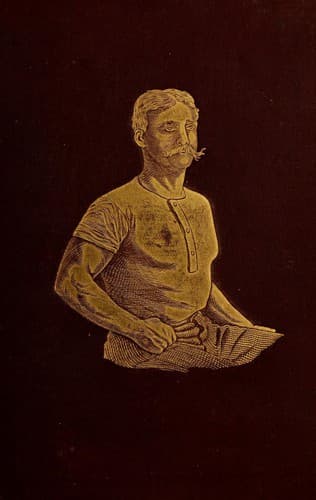
How to Get Strong and How to Stay SoBlaikie, William
Science
How to Get Strong and How to Stay So
Blaikie, William
Physical education and training
And what should a woman do to get this health and strength and bloom? Just
what is done by the young girl. Indeed, there are a hundred exercises,
almost any of which, faithfully followed up, would help directly to bring
the desired result. With her, as with girl or man or boy, the first thing
is to symmetrize, to bring up the weaker muscles by special effort, calling
them at once into vigorous action, and to restore to its proper position
the shoulder, back, or chest, which has been so long allowed to remain out
of place. The symmetry once gained, then equal work for all the muscles,
taken daily, and in such quantities as are found to suit best.
The variety of exercises open to woman, especially out-of-doors, is almost
as great as to man. Every one knows some graceful horsewoman, and it is a
pity there were not a hundred where there is one. One of the most expert
of our acquaintance is the mother of one of the most gifted metaphysicians
in the land, and he already is a middle-aged man. There are a few ladies
in this country, and a good many in England, who think nothing of a five
or six mile walk daily, and an occasional one of twice that length. Once
in a while a married woman here will do some long-distance skating. In
Holland, in the season, it is with many an every-day affair. Some of the
best swimmers and floaters at the watering-places are women, and they
certainly do not look much troubled with nervousness. More than one woman
has distinguished herself in Alpine climbing. The writer once saw a woman,
apparently about twenty-eight, a handsome, vigorous, rosy Englishwoman,
row her father from Putney to Mortlake, on the Thames, a distance of
four miles and three furlongs, not at racing pace, to be sure, but
at a lively speed. The measured precision of that lady's stroke,
the stately poise of the body and head, and the clean, neat, and
effective feathering, would have done credit to an old Oxford oar.
What woman has done, woman may do. Bind one arm in a sling, and keep it
utterly idle for a month, and meanwhile ply the other busily with heavy
work, such as swinging a hammer, axe, or dumb-bell, and is it hard to say
which will be the healthier, the plumper, the stronger--the _live_ arm, at
the end of the month? And will this only apply to men's arms, and not to
women's? Who has usually the stronger, and almost generally the shapelier
arm--the woman who, surrounded with servants, takes her royal ease, and has
American notions and ways of exercise, or the busy maid in her kitchen? If
the latter's arm is large, yet not well-proportioned, it simply means that
some of its muscles have been used far more than the others.
Public-domain text, read in full here on John Shaqi.
Reviews
Reviews
No reviews yet
Be the first to share your thoughts on this work.
Join the Discussion
Join the discussion
Sign in to leave a comment or review.
Sign InorCreate an account