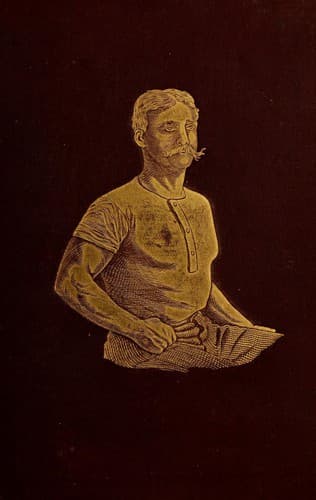
How to Get Strong and How to Stay SoBlaikie, William
Science
How to Get Strong and How to Stay So
Blaikie, William
Physical education and training
Even if the strong man does occasionally become jaded, he knows, as
Hughes did, how to get back his strength and snap, and that a tired man
is many removes from a tired-out one. There is a great deal in knowing
whether your work is overdoing you or simply tiring you. One of the
strongest and best oarsmen Harvard ever had, used, at first, to think he
ought to stop rowing when he began to perspire, and was quite astounded
when an older man told him that that was only the beginning of the real
work. There is no end of comfort to a tired man, either mentally or
physically, in the thought that sure relief is near.
Again, this relief by physical exercise will encourage the man to hope
that, if war or accident do not cut him down, he may look for a long
life, no matter how great may be the occasional strain. Few men, for
instance, familiar with the life of the Duke of Wellington will claim
that they are better workers than he was, or that they get through more
in a day or year, or that, heavy as their responsibilities may be, they
surpass or even equal those which were his for years together. Yet all
the terrible mental strain this illustrious man underwent, battling with
one of the greatest captains this world ever saw, all the exposure and
forced marching, privation and toil, which come to the faithful soldier,
and to him who holds the lives of multitudes in his hands, this man
knew, and yet so controlled his work, exacting as it all was, as to
manage to keep his body superior to all it was called on to do, and his
mind in constant working order, and this not merely up to threescore and
ten, but to fourscore good years, and three more besides. Did not the
vigorous body at the start, and the daily attention to it, pay him?
Will it be claimed that the president of one of the best-known
corporations on this continent did any more work than Wellington? That
president was at it all day, and far into the night, and when away in
Europe, nominally on a play-spell, as well. Naturally, he was a strong,
energetic man; but he had so worked, and so neglected his body, that he
died at fifty-two. Which of the two men showed the better sense?
What does cutting one's self down at fifty-two mean? Five minutes'
reflection should tell any reasonable person that the man was
overworking himself, and going at a pace no man could hold and live.
Does not this show a lack of sense, and especially when much of that
work could certainly have been done by subordinates? Was not one of
Daniel Webster's best points his skill in getting work done by
others, and saving for himself the parts he liked best?
Public-domain text, read in full here on John Shaqi.
Reviews
Reviews
No reviews yet
Be the first to share your thoughts on this work.
Join the Discussion
Join the discussion
Sign in to leave a comment or review.
Sign InorCreate an account