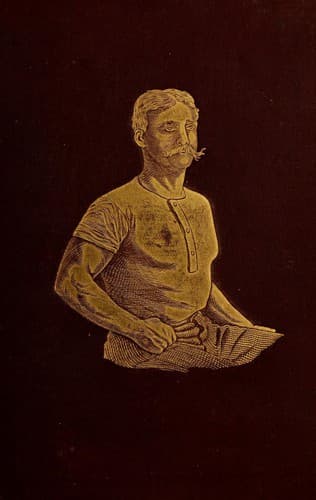
How to Get Strong and How to Stay SoBlaikie, William
Science
How to Get Strong and How to Stay So
Blaikie, William
Physical education and training
In the 1877-'78 annual report of Harvard College, President Eliot, who
has been exceptionally well-placed to observe several thousand young men,
and to know what helps and what hinders their intellectual progress, adds
his valuable testimony to the importance of vigorous health and regular
physical exercise to all who have, or expect to have, steady and severe
mental work to do. Busy professional men may well heed his words. Speaking
of the value of scholarships to poor but deserving young men, he says: "If
sound health were one of the requisitions for the enjoyment of
scholarships, parents who expected to need aid in educating their boys
would have their attention directed in an effective way to the wise
regimen of health; while young men who had their own education to get
would see that it was only prudent for them to secure a wholesome diet,
plenty of fresh air, and _regular exercise_. A singular notion prevails,
especially in the country, that it is the feeble, sickly children who
should be sent to school and college, since they are apparently unfit for
hard work. The fact that, in the history of literature, a few cases can be
pointed out in which genius was lodged in a weak or diseased body, is
sometimes adduced in support of the strange proposition that physical
vigor is not necessary for professional men. But all experience
contradicts these notions. _To attain success and length of service in any
of the learned professions, including that of teaching, a vigorous body is
well-nigh essential._ A busy lawyer, editor, minister, physician, or
teacher has need of _greater physical endurance_ than a farmer, trader,
manufacturer, or mechanic. All professional biography teaches that
_to win lasting distinction in sedentary, in-door occupations,
which task the brain and the nervous system, extraordinary toughness
of body must accompany extraordinary mental powers_."
CHAPTER VI.
HOME GYMNASIUMS.
All that people need for their daily in-door exercises is a few pieces of
apparatus which are fortunately so simple and inexpensive as to be within
the reach of most persons. Buy two pitchfork handles at the agricultural
store. Cut off enough of one of them to leave the main piece a quarter of
an inch shorter than the distance between the jambs of your bedroom door,
and square the ends. On each of these jambs fasten two stout hard-wood
cleats, so slotted that the squared ends of the bar shall fit in snugly
enough not to turn. Let the two lower cleats be directly opposite each
other, and about as high as your shoulder; the other two also opposite each
other, and as high above the head as you can comfortably reach.
Public-domain text, read in full here on John Shaqi.
Reviews
Reviews
No reviews yet
Be the first to share your thoughts on this work.
Join the Discussion
Join the discussion
Sign in to leave a comment or review.
Sign InorCreate an account