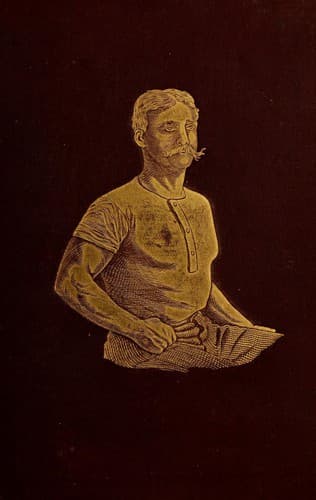
How to Get Strong and How to Stay SoBlaikie, William
Science
How to Get Strong and How to Stay So
Blaikie, William
Physical education and training
Let us see, too, where this physical incapacity may lead to graver
consequences than the mere allowing a detected thief to run at large. In
the great cities there have sprung up within a few years back
storehouses for the safe-keeping of securities, plate, important papers,
and other valuables. Hedged around with plates of steel,
chronometer-locks, massive bolts, and several watchmen, and connected
with the nearest police station by wires so arranged that the doors
cannot be opened without sounding the alarm at the station-house, the
public naturally put their trust in them, and their property too. Within
recent years we also hear far more than formerly of burglars going not
in pairs or threes, but in gangs of half a dozen or more, and of
cracking safes always thought impenetrable. Now, suppose that a descent
were made on the largest one of these safe depositories in America, the
one under the New York Stock Exchange, and by a dozen first-class
cracksmen. Their business hours are generally between one and four in
the morning. That they work with wonderful sagacity, daring, and
despatch, is attested by such brilliant performance as that at the
Northampton Bank robbery, or when they in a little time, one morning,
relieved the Manhattan Bank of a few millions, and that right within a
block of police head-quarters in New York city. Suppose that, by
collusion or otherwise, the robbers get through the outer door. Unlike
the Bank of England, there is no platoon of soldiers on guard. They
silence the three or four who oppose them. They come to the inner doors,
the opening of which alarms the police. At the station-house, when that
alarm sounds, three or four, or maybe more, more or less drowsy officers
start and run for the Stock Exchange, some eight hundred feet away. Is
there any especial reason why they should be any less exhausted when
they get there than the two policemen who failed to catch the Sixth
Avenue thief, or the two who let another on First Avenue run clear out
of their sight? The four blocks the former two policemen ran do not make
much over eight hundred feet. Suppose that three or four, not half-grown
fellows like "sleepy" Dick, but stalwart desperadoes, used to rough
work, quietly await the arrival of these worthy, but well-blown
patrolmen. How long would it take the thieves to at least check the
advance, if not also considerably impair the usefulness of men so
nearly gone that they could not speak, and whose hands shook so that
aiming a revolver effectively would be practically out of the question?
Public-domain text, read in full here on John Shaqi.
Reviews
Reviews
No reviews yet
Be the first to share your thoughts on this work.
Elsewhere in the archive
Join the Discussion
Join the discussion
Sign in to leave a comment or review.
Sign InorCreate an account