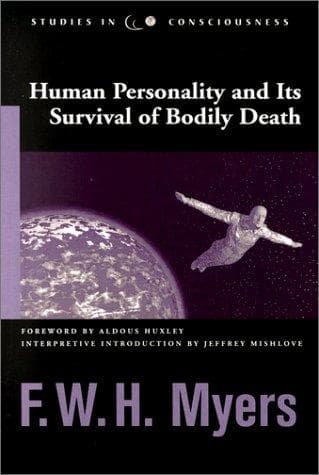
Human Personality and Its Survival of Bodily DeathMyers, F. W. H. (Frederic William Henry)
Religion
Human Personality and Its Survival of Bodily Death
Myers, F. W. H. (Frederic William Henry)
Immortality; Parapsychology; Personality
"For he who hath thus far had intelligence of love, and hath beheld all
fair things in order and aright,--he drawing near to the end of things
lovable shall behold a BEING marvellously fair; for whose sake in truth
it is that all the previous labours have been undergone: One who is from
everlasting, and neither is born nor perisheth, nor can wax nor wane,
nor hath change or turning or alteration of foul and fair; nor can that
beauty be imagined after the fashion of face or hands or bodily parts
and members, nor in any form of speech or knowledge, nor as dwelling in
aught but in itself; neither in beast nor man nor earth nor heaven nor
any other creature; but Beauty only and alone and separate and eternal,
which, albeit all other fair things partake thereof and grow and perish,
itself without change or increase or diminution endures for everlasting.
And whoso being led on and upward by human loves begins to see that
Beauty, he is not far, I say, from reaching the end of all. And surely
then, O Socrates (said that guest from Mantinea), man's life is worth
the living, when he beholds that Primal Fair; which when thou seest it
shall not seem to thee to be made after the fashion of gold or raiment
or those forms of earth,--whom now beholding thou art stricken dumb, and
fain, if it were possible, without thought of meat or drink, wouldst
look and love for ever. What would it be, then, were it granted to any
man to see Very Beauty clear;--incorruptible and undefiled, not mingled
with colour or flesh of man, or with aught that can consume away, but
single and divine? Could man's life, in that vision and beatitude, be
poor or low? or deemest thou not (said she), that then alone it will be
possible for this man, discerning spiritual beauty with those eyes by
which it is spiritually discerned, to beget no shadows of virtue, since
that is no shadow to which he clings, but virtue in very truth, since he
hath the very Truth in his embrace? and begetting and rearing Virtue as
his child, he must needs become the friend of God; and if there be any
man who is immortal, that man is he."
Public-domain text, read in full here on John Shaqi.
Reviews
Reviews
No reviews yet
Be the first to share your thoughts on this work.
Elsewhere in the archive
Join the Discussion
Join the discussion
Sign in to leave a comment or review.
Sign InorCreate an account