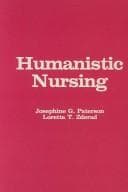
Since nursing involves one human being helping another, the notion of
humaneness has been associated traditionally with nursing. Nursing
practice is criticized justifiably when it is not humane and is taken
for granted or praised when it is. The expectation of humaneness is so
ingrained in the concept of nursing that some nurses are surprised when
it is acknowledged by patients. If a patient thanks them for their
kindness, patience, or concern, these nurses reply, in their
embarrassment, "Oh, that's part of my job."
However, to equate nursing's humanistic character solely with an
overflowing of the milk of human kindness is a serious error of
oversimplification. Such a limited view, in fact, is a dehumanizing
denial of man's potentials. As a human transaction, the phenomenon of
nursing contains all the human potentials and limitations of each unique
participant. For instance, frustration, discouragement, anger,
rejection, withdrawal, loneliness, aggression, impatience, envy, grief,
despair, pain, and suffering are constituents of nursing, as well as
tenderness, caring, courage, trust, joy, hope. In other words, since
nursing is lived by humans, the "stuff" of nursing includes all possible
responses of man--man needing and man helping--in his situation.
Intersubjective Transaction
Looking again at the phenomenon of nursing as it occurs in the real
lived world, obviously it is always an interhuman event. Whenever
nursing takes {13} place two (or more) human beings are related in a
shared situation. Each participates according to his own mode of being
in the situation, that is, as a person nursing or as a person begin
nursed. Since one is nursing and the other is being nursed, it follows
that the essential character of the situation is "nurturance." In other
words, the phenomenon of nursing involves nurturing, being nurtured, and
a relation--the "between" in which or through which the nurturance
occurs.
On reflection, it is obvious that nursing is an intersubjective
transaction. Both persons, nurse and patient (client, family, group),
necessarily participate in the proceedings. In this sense, they are
_inter_dependent. Yet, they are both subjects, that is, each is the
originator of human acts and of human responses to the other. In this
sense, they are _in_dependent. The intersubjective transactional
character of nursing cannot be escaped when one is experiencing the
phenomenon, either as nurse or as patient. Consider for example, some of
the most common nursing activities, such as, feeding and being fed,
comforting and being comforted, giving and taking medications. Although
this intersubjectivity is unmistakably known in experience, it is
extremely difficult to conceptualize and convey it to others. It rarely
is found in descriptions of nursing, and to the unfortunate extent that
it is missing, the descriptions are not true to life.
Public-domain text, read in full here on John Shaqi.
Reviews
Reviews
No reviews yet
Be the first to share your thoughts on this work.
Join the Discussion
Join the discussion
Sign in to leave a comment or review.
Sign InorCreate an account