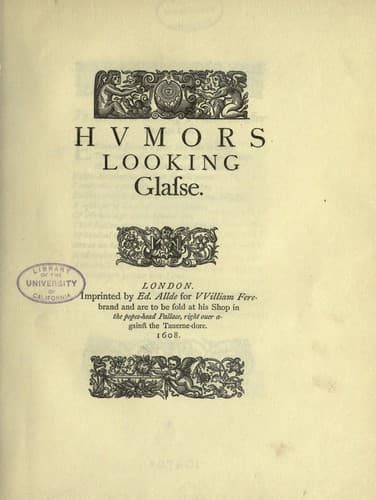
English poetry -- Early modern, 1500-1700; Satire, English -- Early works to 1800
What’s he that stares as if he were afright?
The fellowe sure hath seene some dreadfull spright
Masse rightly guest, why sure I did divine,
Hee’s haunted with a Spirit feminine.
In plaine termes thus, the Spirit that I meane,
His martiall wife that notable curst queane,
No other weapons but her nailes or fist,
Poore patient Idiot he dares not resist,
His neighbor once would borrow but his knife,
Good neighbor stay (quoth he) ile aske my wife:
Once came he home inspired in the head,
He found his neighbor and his wife a bed,
Yet durst not sturre, but hide him in a hole,
He feared to displease his wife poore soule.
But why should he so dreade and feare her hate,
Since she had given him armor for his pate?
Next day forsooth he doth his neighbor meete,
Whome with sterne rage thus furiously doth greete,
Villaine ile slit thy nose, out comes his knife,
Sirra (quoth he) goe to Ile tell your wife.
Apaled at which terror, meekely faide
Retire good knife my furie is allaide.
_Proteus._
Time serving humour thou wrie-faced Ape,
That canst transforme thy selfe to any shape:
Come good _Proteus_ come away a pace,
We long to see thy mumping Antique face.
This is the fellow that lives by his wit,
A cogging knave and fawning Parrasit,
He has behaviour for the greatest porte,
And hee has humors for the rascall sorte,
He has beene great with Lordes and high estates,
They could not live without his rare conceites,
He was associat for the bravest spirits,
His galland carriage such favour merrits.
Yet to a Ruffiin humor for the stewes,
A right graund Captaine of the damned crewes,
With whome his humor alwayes is unstable
Mad, melancholly, drunke and variable.
Hat without band like cutting Dicke he goe’s,
Renowned for his new invented oathes.
Sometimes like a Civilian, tis strange
At twelve a clocke he must unto the Change,
Where being thought a Marchant to the eye,
He tels strange newes his humor is to lie.
Some Damaske coate the effect thereof must heare,
Invites him home and there he gets good cheare.
But how is’t now such brave renowned wits,
Weare ragged robes with such huge gastly slits,
Faith thus a ragged humour he hath got
Whole garments for the Summer are too hot.
Thus you may censure gently if you please,
He weares such garments onely for his ease.
Or thus his credit will no longer wave.
For all men know him for a prating knave.
_Epigram._
Public-domain text, read in full here on John Shaqi.
Reviews
Reviews
No reviews yet
Be the first to share your thoughts on this work.
Join the Discussion
Join the discussion
Sign in to leave a comment or review.
Sign InorCreate an account