Idling in Italy: Studies of literature and of life — John Shaqi
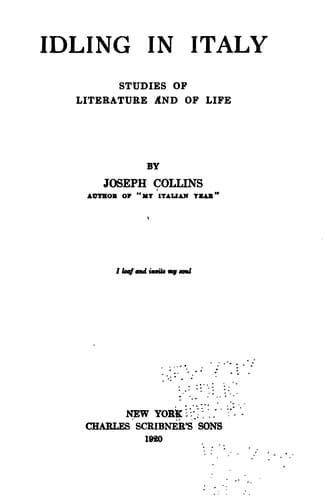
Idling in Italy: Studies of literature and of lifeCollins, Joseph
History
Idling in Italy: Studies of literature and of life
Collins, Joseph
Italian literature -- History and criticism
A literary production of this period which must be mentioned, not
because of its merits but because it is a sign of the times, was that of
Cesare Cantù (1804-1895), a universal history in thirty-five volumes,
which went through forty editions. It displays lucidity of statement,
sequential narrative, and finished literary technic. It was highly
partisan and not based on critical study of documentary evidence. He saw
in all Italian writers, beginning with Dante, enemies of the church and
of God. All had something false in their art which it pleased him to
reveal. Italian writers were all anti-Catholic, and classic literature
was all pagan; he excepted Manzoni, however, and himself.
Two noteworthy historic writers were V. Gioberti (1801-1852) and
Pasquale Galluppi (1770-1846), though the latter confined himself
chiefly to philosophy. No review of the literature of this period should
fail to mention Francesco de Sanctis (1817-1883), one of the most
versatile and soundest literary critics, who was assiduous in calling
the attention of his countrymen to the writings of foreigners and in
keenly analyzing and evaluating home productions, and Pasquale Villari,
the historian of Savonarola and Macchiavelli.
There were two great literary figures in the romantic triumph of Italy
of the nineteenth century, Manzoni and Leopardi, and after their death
no figure of any importance came upon the stage for upward of a
generation.
During this period--from 1830 to 1860, let us say--the rocks from which
were to gush forth the waters of liberalism were being drilled. The
times were too tense to facilitate imaginative literature, and mere
record of events was more startling and absorbing than fiction.
It was not until Giosuè Carducci (1836-1907) entered the arena and dealt
romanticism a blow, and at the same time restored classicism, that
Leopardi had a worthy successor.
Public-domain text, read in full here on John Shaqi.
Reviews
Reviews
No reviews yet
Be the first to share your thoughts on this work.
Join the Discussion
Join the discussion
Sign in to leave a comment or review.
Sign InorCreate an account