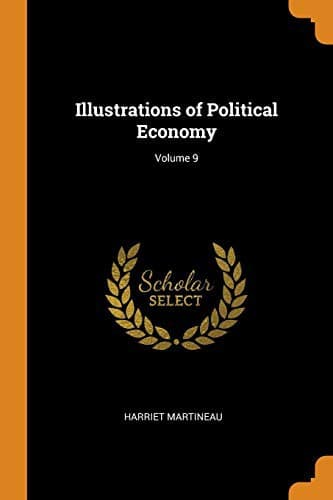
Illustrations of political economy, Volume 9 (of 9) — John Shaqi
Illustrations of political economy, Volume 9 (of 9)Martineau, Harriet
General
Illustrations of political economy, Volume 9 (of 9)
Martineau, Harriet
Didactic fiction, English; Political fiction, English; Social problems -- Fiction
Why not foretell? Was it not certain that when a tax on an article of
consumption was increased, the consumption fell off in a definite
proportion?
Quite certain; but then came in another sort of disturbance. When duties
rose very high, smuggling was the next thing; and there was no
calculating how smuggling might keep up the demand.
“Nor what new taxes it may lead to,” observed Henry. “If the consumption
of taxed articles falls off, the revenue suffers; and if, at the same
time, smuggling increases, new expenses are incurred for guarding the
coast. The people must pay both for the one and the other; and so, the
next thing is to lay on new taxes.”
“Ah!” groaned the old man. “They begin to talk of an income tax.”
Whatever Henry’s opinion of an income tax might be, he was aware that
few inflictions could be so dreadful to his father. Mr. Farrer,
possessed, it was supposed, of nearly half a million, managed to pay
less in taxes than most of his neighbours who happened to have eight
hundred a year, and spent it. Mr. Farrer eschewed luxuries, except a few
of the most unexpensive; he was sparing of comforts, and got off paying
more to the state than any other man who must have common food,
clothing, and house-room. His contributions must be prodigiously
increased if he was to be made to pay in proportion to his income. It
was a subject on which none of his family dared to speak, even on this
morrow of a piece of good fortune. The most moderate income tax would
sweep away more than the addition gained by the dropping of the two
lives in the joint annuity.
“They had better mend their old ways than try new,” said Michael. “If
they knew how, they might get more by every tax than it has yielded yet.
Peek says so. He says there is not a taxed article eaten or drunk, or
used, that would not yield more if the tax was lowered; and Peek ought
to know.”
“And you ought to know, Mike, that you are the last man that should wish
for such a change,” said his father, with a sly wink. Michael’s laugh
made his brother uneasy; he scarcely knew why.
“It is a great wrong, I think,” said Henry, “to keep the poorer classes
from the use of comforts and luxuries that they might have, if the state
managed its plan of taxation better.”
“Well, and so it is, Henry; and I often say so when I see a poor man
come for his tobacco, and grumble at the price, and threaten it shall be
the last time; and a poor woman cheapen her ounce of tea, and taste the
butter and smell at the cheese, and go away without buying any of them.
As long as good management would serve to satisfy such poor creatures as
these, without bringing an income tax upon their betters, it is a shame
there is no such management.”
“How much more would be consumed in your family, sir, if taxes on
commodities were lowered as you would have them?”
Public-domain text, read in full here on John Shaqi.
Reviews
Reviews
No reviews yet
Be the first to share your thoughts on this work.
Join the Discussion
Join the discussion
Sign in to leave a comment or review.
Sign InorCreate an account