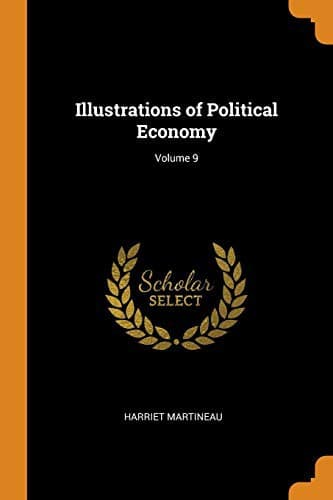
Illustrations of political economy, Volume 9 (of 9)Martineau, Harriet
General
Illustrations of political economy, Volume 9 (of 9)
Martineau, Harriet
Didactic fiction, English; Political fiction, English; Social problems -- Fiction
“Ah! that interest is the great grievance. If the debt be allowed to
accumulate, your nation may be subjected, within half a century from
this time, to a permanent charge of interest which would of itself have
sufficed to pay for all the wars from the time the debt began. Yes, this
annual raising of interest is the grievance;—the transferring such
enormous sums from the pockets of some classes of men into hands where
it would never naturally find its way. Your ministers may say what they
will about the debt being no actual loss to the country, since the whole
transaction passes within the country;—this does not lessen the burden
to those who have to pay over their earnings to the national creditor,
whose capital has been blown away in gunpowder at sea, and buried with
the dead bodies of their countrymen abroad.”
“Besides,” suggested Marie, “if there is no mischief in carrying on the
debt because the transaction passes within the country, there could be
no harm in paying it off, since that transaction would also be only a
transference.”
“Very true. If all were assessed to pay off the public creditor, there
would be no total loss. And as for the real evils,—the diversion of
capital from its natural channels, and the oppression of industry,—the
remedy of these would be so inestimable a relief, that in a little while
the parties who paid the largest share would wonder at their own ease,
and at the long delay of the nation in shaking off its burdens.”
“Like the heir who has resolution to sell a part of his mortgaged estate
in order to disencumber the remainder. But who are they that would pay
the largest share?”
“The richest, of course. All must contribute something. Even the
labourer would willingly spare a portion of his earnings for the sake of
having his earnings to himself for ever after. But by the aristocracy
was this debt proposed; for their sakes was it incurred; by them is it
accumulated; while it is certain that the burden is very far from being
duly borne by them. From them, therefore, should the liquidation chiefly
proceed.”
“But did not you say that parliament claps its hands at every proposal
to burden posterity?”
“Yes: but what kind of a parliament? If Mr. Grey should ever obtain his
great object,—if there should ever be a parliament through which the
people may speak, and if the people should then declare themselves
content to go on bearing the burden that the aristocracy of this day is
imposing upon them, why, let the people have their way; and I, for one,
shall wish them joy of their patience. But if, when the people can
protest, and make their protests heard, they call for such an assessment
as shall include all, but fall heaviest on those through whom the debt
was incurred, they will do that which is not only just in the abstract,
but (like all that is essentially just) that which is most easy, most
prudent, and must prove most fortunate.”
Public-domain text, read in full here on John Shaqi.
Reviews
Reviews
No reviews yet
Be the first to share your thoughts on this work.
Join the Discussion
Join the discussion
Sign in to leave a comment or review.
Sign InorCreate an account