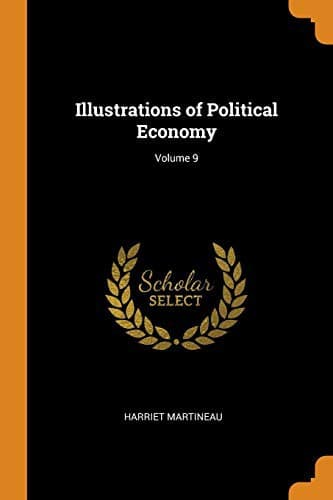
Illustrations of political economy, Volume 9 (of 9)Martineau, Harriet
General
Illustrations of political economy, Volume 9 (of 9)
Martineau, Harriet
Didactic fiction, English; Political fiction, English; Social problems -- Fiction
“When people are careless of their heirs, love, as rulers are of the
people’s posterity, they find it easier to borrow and spend, than to
make their spendings and their levies agree. When rulers are afraid to
ask for so much as they desire to spend, they escape, by proposing
loans, the unpleasantness of taxing. Heavily as our governments have
taxed us, they have been actually afraid to tax us enough;—enough for
the purposes proposed to the nation.”
“They were afraid of making the people impatient.”
“Just so; and the people have shown what the rulers of many centuries
have considered an ‘ignorant impatience of taxation.’ That is, the
nominal representatives of the people have encouraged expensive projects
for which the people have shown themselves unwilling to pay. The rulers
and the people thus appear unreasonable to each other; while the blame
chiefly rests in calling those the representatives of the people who are
really not so. Mr. Grey and the friends of the people are doing what
they can to bring the two parties to an understanding. When this is
done, I trust there will be no going to war at the expense of future
generations,—no running into expenses for which the means are not
already provided.”
“They who first devised these public loans could not have guessed what
they were doing, Henry.”
“They never imagined that any one would so improve upon their practice
of borrowing, as not to provide for the payment at some definite time.
If,—as may happen on the unexpected breaking out of a war when the
nation is not in very favourable circumstances,—it is perilous to tax it
heavily and suddenly, it may be expedient to raise the supplies in a way
which will enable the people to pay more conveniently, at their own
leisure. But the period should be fixed when the money is raised. The
money should be raised upon terminable annuities; so that, at least,
every one may know how long the burden is to endure. This is a plain
rule; and happy would it have been for the country if it had been
observed from the day when——”
“When its system of loans began?”
“I would hardly say that; for I do not see how the rulers in the
troubled times of the Revolution could have governed the country without
loans. The tax-payers were so divided in their loyalty at the time, that
King William and his councillors would not have been able to raise money
enough for the struggle by taxation, and would only have made themselves
hated for the attempt. But a foreign war, undertaken by an undivided
people, is a wholly different affair; and the advisers of George II. had
no business to carry on the borrowing system.”
“They found the debt large, I suppose, and left it larger; according to
the methods of borrowers from posterity.”
“Yes; it amounted, when it came into their hands, to fifty-two millions,
having grown to this since the Revolution, when it was only 664,000_l._
It is now five times fifty-two millions.”
Public-domain text, read in full here on John Shaqi.
Reviews
Reviews
No reviews yet
Be the first to share your thoughts on this work.
Join the Discussion
Join the discussion
Sign in to leave a comment or review.
Sign InorCreate an account