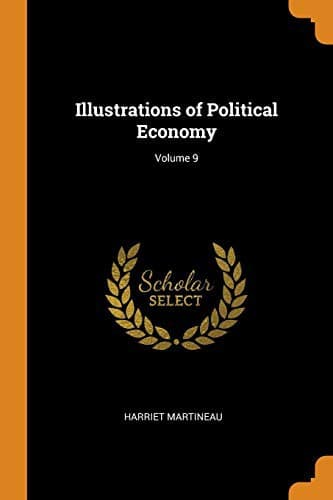
Illustrations of political economy, Volume 9 (of 9) — John Shaqi
Illustrations of political economy, Volume 9 (of 9)Martineau, Harriet
General
Illustrations of political economy, Volume 9 (of 9)
Martineau, Harriet
Didactic fiction, English; Political fiction, English; Social problems -- Fiction
“Yes, I was warned by her that the last impiety is to fear; and the
worst penalty of adversity to suspect. I was warned by her that the
chief danger in civil revolution is to forget green meadows and bright
skies in fields of blood and clouds of smoke; and that those who shrink
from looking fully and kindly even upon those who may be the reptiles of
their race, are less wise than the poor prisoner in the Bastile who made
friendship with his spider instead of trying to flee from it.”
“And she observed her own warning, Marie. How her murderers quailed
before her open gaze!”
“Ah, yes! In her prison, she brought home to her the materials of
happiness; and with them neither dread nor suspicion can co-exist. She
brought back into her own bosom the wild flowers which she had worn
there in her childhood; and the creations of her father, the artist; and
the speculations of her husband, the philosopher; and opened up again
the springs of the intellect, which may gush from the hardest dungeon
walls; and wakened up the voice of her mother to thrill the very heart
of silence; and dismissed one obedient faculty at morn to travel with
the sun, and ride at eve down his last slanting ray with tidings of how
embryo man is working his way into light and freedom; and summoned
another obedient faculty at midnight to paint upon the darkness the
image of regenerated man, with his eye fixed upon science, and his hand
supporting his fellow man, and his foot treading down the painted
trifles and deformed usurpations of the world that is passing away.
Having gazed upon this, what were any spectres of darkness to her,—
whether the scowls of traitors, or an axe hanging by a hair?”
“Would that all who desire that women should have kindliness, and
domestic thoughtfulness, and cheerfulness, and grace, knew your friend
as you knew her, Marie!”
“Then would they learn from what quarter of the moral heavens these
endowments may be fetched by human aspiration. Would they behold
kindliness and lightness of spirit? They must give the consciousness of
being able to bestow, instead of the mere craving to receive, the
support which intellect must yield to intellect, if heart is to answer
to heart. Would they have homely thoughtfulness? They must not obstruct
that full intellectual light in which small things dress themselves in
their most shining beauty, as the little fly that looks dark beneath a
candle shows itself burnished at noon. Let men but lay open the universe
for the spirit of woman to exercise itself in, and they may chance to
see again with what grace a woman about to die can beseech the favour to
suffer more than her companions.”
Public-domain text, read in full here on John Shaqi.
Reviews
Reviews
No reviews yet
Be the first to share your thoughts on this work.
Join the Discussion
Join the discussion
Sign in to leave a comment or review.
Sign InorCreate an account