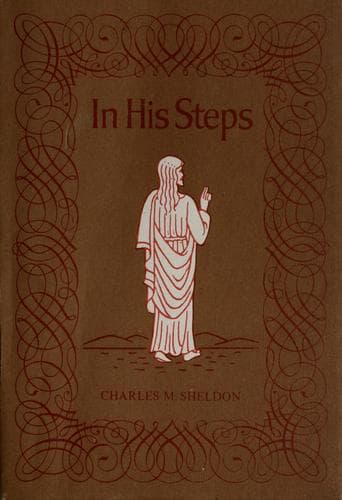
Christian fiction; Clergy -- Fiction; Jesus Christ -- Influence -- Fiction
It was also true that the pastor of the First Church loved to
preach. He seldom exchanged. He was eager to be in his own pulpit
when Sunday came. There was an exhilarating half hour for him as he
faced a church full of people and know that he had a hearing. He was
peculiarly sensitive to variations in the attendance. He never
preached well before a small audience. The weather also affected him
decidedly. He was at his best before just such an audience as faced
him now, on just such a morning. He felt a glow of satisfaction as
he went on. The church was the first in the city. It had the best
choir. It had a membership composed of the leading people,
representatives of the wealth, society and intelligence of Raymond.
He was going abroad on a three months vacation in the summer, and
the circumstances of his pastorate, his influence and his position
as pastor of the First Church in the city--
It is not certain that the Rev. Henry Maxwell knew just how he could
carry on that thought in connection with his sermon, but as he drew
near the end of it he knew that he had at some point in his delivery
had all those feelings. They had entered into the very substance of
his thought; it might have been all in a few seconds of time, but he
had been conscious of defining his position and his emotions as well
as if he had held a soliloquy, and his delivery partook of the
thrill of deep personal satisfaction.
The sermon was interesting. It was full of striking sentences. They
would have commanded attention printed. Spoken with the passion of a
dramatic utterance that had the good taste never to offend with a
suspicion of ranting or declamation, they were very effective. If
the Rev. Henry Maxwell that morning felt satisfied with the
conditions of his pastorate, the First Church also had a similar
feeling as it congratulated itself on the presence in the pulpit of
this scholarly, refined, somewhat striking face and figure,
preaching with such animation and freedom from all vulgar, noisy or
disagreeable mannerism.
Suddenly, into the midst of this perfect accord and concord between
preacher and audience, there came a very remarkable interruption. It
would be difficult to indicate the extent of the shock which this
interruption measured. It was so unexpected, so entirely contrary to
any thought of any person present that it offered no room for
argument or, for the time being, of resistance.
The sermon had come to a close. Mr. Maxwell had just turned the half
of the big Bible over upon his manuscript and was about to sit down
as the quartet prepared to arise to sing the closing selection,
"All for Jesus, all for Jesus,
All my being's ransomed powers..."
when the entire congregation was startled by the sound of a man's
voice. It came from the rear of the church, from one of the seats
under the gallery. The next moment the figure of a man came out of
the shadow there and walked down the middle aisle.
Public-domain text, read in full here on John Shaqi.
Reviews
Reviews
No reviews yet
Be the first to share your thoughts on this work.
Join the Discussion
Join the discussion
Sign in to leave a comment or review.
Sign InorCreate an account