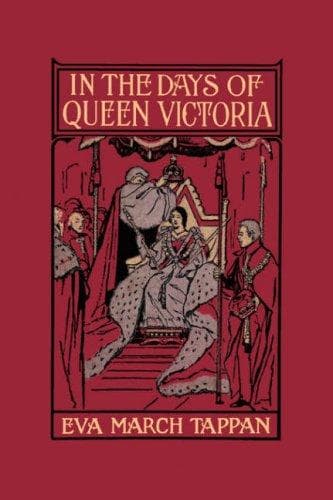
Great Britain -- History -- Victoria, 1837-1901 -- Fiction
"That makes no difference," replied the storekeeper, and he began to
wrap the box with her other purchases.
"No," objected the governess, "the Princess has not the money, and she
must not buy what she cannot pay for."
"Then I will lay it aside until she can purchase it," said the
storekeeper, and the little girl exclaimed, "Oh, thank you! if you will
be so good."
When the day for the payment of her allowance came, the child did not
delay a moment, but long before her breakfast hour she appeared at the
store to pay for the box and carry it home with her. She was not at all
afraid of carrying bundles, and thought it was a delightful expedition
to go to the milliner's with her mother and Feodore to buy a new hat,
to wait in the shop until it was trimmed, and then carry it home in her
own hand.
The great excitement of her seventh year was the visit that she paid
the King. Disagreeable as he often was to the mother, he made himself
quite charming to the child, and he was delighted with the frank
affection that she showed him in return.
"The band shall play whatever you choose," he said to her. "What shall
it be?"
"I should like 'God Save the King,'" replied the little girl.
It was hard to be jealous of such an heir to the throne as that. During
her stay the King had taken her to drive, and this was a great event,
for he himself had held the reins. When she was saying farewell at the
close of the three-days' visit, he asked, "What have you enjoyed most
during your visit?" and he was much pleased when she answered, "Oh,
Uncle King, the drive I had with you." It is no wonder that the
grandmother in Coburg wrote, "The little monkey must have pleased and
amused him; she is such a pretty, clever child."
The Duchess was beginning to receive the reward that she deserved for
giving up her home and her friends, not only in the result of her
devotion to her little daughter as shown in the child's character, but
also in the appreciation of herself and her efforts which was felt in
her adopted country. In both the House of Lords and the House of
Commons speeches had been made paying the warmest tributes to the
manner in which she was bringing up the little girl who was to become
the queen.
Before Victoria was eight years old, it was thought to be time for her
education to receive still more attention, though one would suppose
that there need have been no anxiety about the intellectual progress of
the child, who before she was six years old could repeat the heads of
one of the lengthy sermons of the day. Mr. Davys was now formally
appointed her tutor, and he went to live at Kensington. Then, indeed,
there was work. Miss Lehzen, governess of the Princess Feodore, taught
the child as usual; a writing-master made his appearance, who taught
her the clear, refined, and dignified hand that never changed; a
teacher of singing was engaged; another teacher instructed her in
dancing; a Royal Academician taught her drawing; German and French were
also studied.
Public-domain text, read in full here on John Shaqi.
Reviews
Reviews
No reviews yet
Be the first to share your thoughts on this work.
Join the Discussion
Join the discussion
Sign in to leave a comment or review.
Sign InorCreate an account