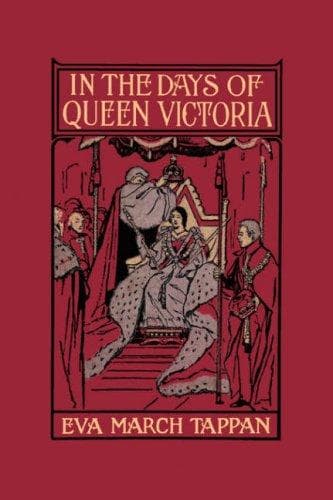
Great Britain -- History -- Victoria, 1837-1901 -- Fiction
The Duchess believed that the training of the future queen was the most
important matter in the country. She could hardly have helped feeling
that she had been most successful in her efforts to make the child what
she ought to be, but after all, she herself was a German, her child was
to rule an English realm, and the careful mother wished to make sure
that the little girl was having the kind of instruction that would best
prepare her for the difficult position she would have to fill. She
selected two bishops as her advisers, men of much learning and fine
character, and wrote them a long letter about the Princess. She told
them what masters had been chosen for her and in what branch each one
had instructed her. She enclosed a list of the books the Princess had
read, a record of every lesson she had taken, and the schedule of her
study hours. She said that she herself had been present at almost every
lesson, and that Miss Lehzen, whose special task it was to assist the
little girl in preparing her work for the different masters, was always
in attendance.
With this letter went a report from each instructor, stating not only
what books she had used but what his opinion was of her progress and
ability. Although there was so much temptation to use flattery, these
reports seem to have been written with remarkable sincerity and
truthfulness. The writing master said that his pupil had "a peculiar
talent" for arithmetic, but he was apparently not quite satisfied with
her handwriting, for he closed with the sentence, "If the Princess
endeavors to imitate her writing examples, her success is certain." The
teacher of German wrote, "Her orthography is now tolerably correct,"
but he did not show the least enthusiasm over his statement, "There is
no doubt of her knowing the leading rules of the German language quite
well," though surely this was no small acquisition for a child of
eleven. The French teacher declared that her pronunciation was perfect,
that she was well advanced in knowledge of French grammar and could
carry on a conversation in French, but that she spoke better than she
wrote. He added: "The Princess is much further advanced than is usually
the case with children of her age." Mr. Davys, with his great love for
his little pupil, seems to have had a struggle with himself to keep
from speaking of her as warmly as he longed to speak, but he did allow
himself to say at the close of his report:
"It is my expectation that the disposition and attainments of the
Princess will be such as to gratify the anxious wishes, as well as to
reward the earnest exertions, with which your Royal Highness has
watched over the education of the Princess."
Public-domain text, read in full here on John Shaqi.
Reviews
Reviews
No reviews yet
Be the first to share your thoughts on this work.
Join the Discussion
Join the discussion
Sign in to leave a comment or review.
Sign InorCreate an account