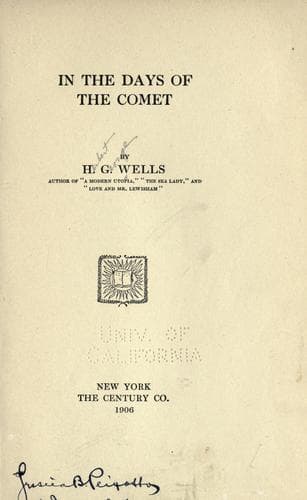
In the Days of the CometWells, H. G. (Herbert George)
Science
In the Days of the Comet
Wells, H. G. (Herbert George)
Comets -- Collisions with Earth -- Fiction; Political fiction; Science fiction; Utopian fiction; Utopias -- Fiction
I saw enough of them to understand their nature, and I am not surprised
to learn now that before the comet came, all about the world, even
among savages, even among cannibals, these same, or at any rate closely
similar, periodic upheavals went on. The world was stifling; it was in
a fever, and these phenomena were neither more nor less than the
instinctive struggle of the organism against the ebb of its powers, the
clogging of its veins, the limitation of its life. Invariably these
revivals followed periods of sordid and restricted living. Men obeyed
their base immediate motives until the world grew unendurably bitter.
Some disappointment, some thwarting, lit up for them—darkly indeed, but
yet enough for indistinct vision—the crowded squalor, the dark
inclosure of life. A sudden disgust with the insensate smallness of the
old-world way of living, a realization of sin, a sense of the
unworthiness of all individual things, a desire for something
comprehensive, sustaining, something greater, for wider communions and
less habitual things, filled them. Their souls, which were shaped for
wider issues, cried out suddenly amidst the petty interests, the narrow
prohibitions, of life, “Not this! not this!” A great passion to escape
from the jealous prison of themselves, an inarticulate, stammering,
weeping passion shook them. . . .
I have seen——— I remember how once in Clayton Calvinistic Methodist
chapel I saw—his spotty fat face strangely distorted under the
flickering gas-flares—old Pallet the ironmonger repent. He went to the
form of repentance, a bench reserved for such exhibitions, and
slobbered out his sorrow and disgust for some sexual indelicacy—he was
a widower—and I can see now how his loose fat body quivered and swayed
with his grief. He poured it out to five hundred people, from whom in
common times he hid his every thought and purpose. And it is a fact, it
shows where reality lay, that we two youngsters laughed not at all at
that blubbering grotesque, we did not even think the distant shadow of
a smile. We two sat grave and intent—perhaps wondering.
Only afterward and with an effort did we scoff. . . .
Public-domain text, read in full here on John Shaqi.
Reviews
Reviews
No reviews yet
Be the first to share your thoughts on this work.
Elsewhere in the archive
Join the Discussion
Join the discussion
Sign in to leave a comment or review.
Sign InorCreate an account